|
| |
The Douglas Family of Cavers
The Douglas family of Cavers shaped Roxburghshire’s, and indeed Scotland's, history through centuries of resilience and influence. As stewards of Cavers Castle, they navigated feudal politics, royal favour, and local governance with tact. Their legacy spans landownership, military service, and civic leadership, leaving a lasting imprint on the Borders’ social and architectural landscape. Though fortunes shifted, their commitment to place endured. Today, the remnants of their estate and the stories surrounding it offer insight into rural Scotland’s evolution—its buildings, economy, and identity. The Douglases of Cavers remain a compelling thread in the tapestry of Scottish heritage.
Read more...
| |
Cavers Family Legacy
The Douglases of Cavers shaped Scottish history through centuries of influence, military service, and enduring commitment to their Borders' place.
Read More
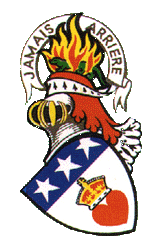
Cavers Heraldry
From banners to crockery, the family has emblazoned their arms on items
demonstraing their position and influence...
Read More
Cavers Genealogy
Family trees and lineage for this Douglas family.
Read More
Cavers and religion
The Religious Legacy of the Douglas of Cavers Family.
Read More
Cavers Church
Local legend claims that the Cavers Church was founded by followers of St Columba 1,400 years ago...
Read More
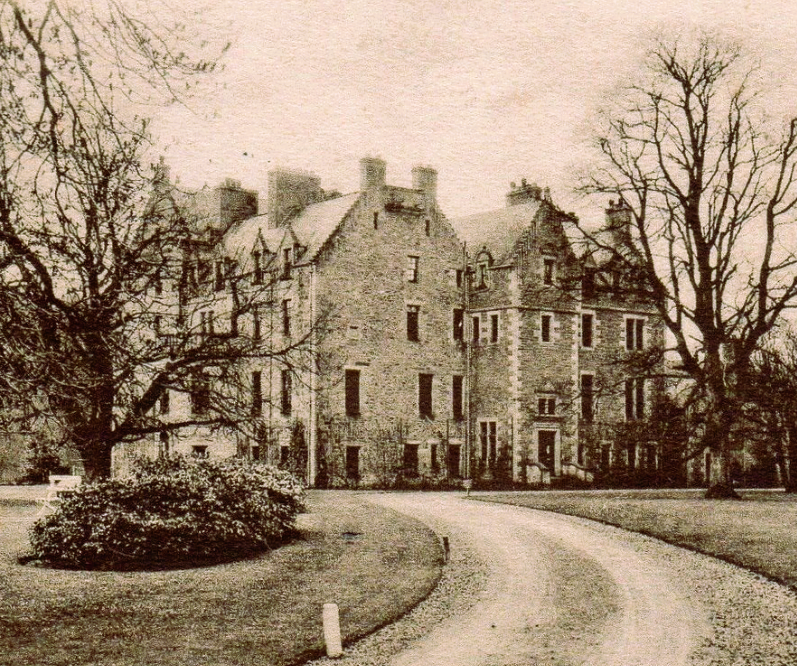
Cavers House
Also known as Cavers Castle, this property has a long history, but also a
sad ending.
Read More
Cavers Places
The family has left its mark in various places around the world.
Read More
Family DNA
Pedigrees related to DNA research into the Cavers family.
Read More
European Legacy
Descendants Sir James Douglas, 5th of Cavers, founded several European
dynasties.
Read More
End of an Era
The last of the Douglas family of Cavers, and of the castle and estate.
Read More
Cavers ongoing queries
A collaborative effort is required to solve a number of unresolved
matters arising from our research.
Read More
|
|
| |
The Douglas family of Cavers is a distinguished branch of the
powerful Douglas clan, deeply rooted in Scottish medieval
history and tied to the lands of Roxburghshire. Here's a concise
overview of their lineage and legacy:
🏰 Origins and Land Grants
- The Cavers estate was granted in 1320 to Sir James
Douglas, known as “The Good,” by Robert the Bruce
as a reward for his loyalty and military service, notably at
Bannockburn.
- In 1324, Bruce issued the “Emerald Charter,” granting
Sir James criminal jurisdiction over his estates and
exempting the Douglases from certain feudal obligations.
🧬 Lineage and Succession
- After Sir James’s death in 1330, the estate passed
through various hands due to deaths in battle and issues of
legitimacy.
- Archibald Douglas, known as “Black Archibald,”
a natural son of James, 2nd Earl of Douglas and Mar, was
granted Cavers and the hereditary sheriffship of Teviotdale
by his aunt, Lady Isobel Douglas, Countess of Mar, in 1404.
- His son, William Douglas, became the 2nd Lord
of Cavers, born in 1395 and died in 1464. He married Lady
Catherine Colville and had several children, including
Sir Archibald Douglas, 3rd Lord of Cavers.
📜 Heraldry and Influence
- The Douglases of Cavers held significant regional power,
especially through their role as hereditary sheriffs of
Teviotdale.
- Their heraldic seals often featured a heart and stars,
symbolizing their connection to the Good Sir James and the
Douglas legacy.
🧭 Later Generations
- The family continued through successive generations,
including Sir James Douglas of Cavers (d. 1545),
who married into the Murray family, and Sir William
Douglas of Cavers, active in the late 16th century.
- The Cavers line also branched into families such as the Douglases of Friarshaw and Todhoillis, maintaining influence
in the Borders region.
|
|
| |
The Cavers Section
The Douglas Archives seeks to preserve, protect and make widely
known the enormous contribution that members of the Clan Douglas
have made, and are still making, in politics, medicine,
literature, music, sport, exploration and other forms of
scientific endeavour, military campaigns and many other fields.
In this section, we focus on the Douglases of Cavers, and their descendants. |
|
The Douglas Archives
This is a digital archive and so we are not able to
preserve manuscripts, artefacts, buildings or other
tangible assets. It is regretful that there is no
international clan centre that is able to do this.
However, we recognise that the great Douglas families,
the Dukes of Buccleuch and Hamilton, and the Earls of
Home and Morton, do much to protect their family
heritage, and that the Museum in the town of Douglas, in
Lanarkshire, also plays its part part.
|
|
A growing collection
The Douglas Archives are, at the
time of writing, a collection of 12,500 files with 8,000
images containing material, some still un-edited, from a
wide variety of sources. New material is included almost
daily, though not necessarily published immediately. The
result is a dynamic archive of biographies, anecdotes
and historical material about the Douglas family.
I am grateful to the contributors to the history of
the Douglas of Cavers family who provided much of
the material for this series of articles. |
|
|
|
|
|
|
Errors and Omissions
|
|
The Forum
|
|
What's new?
|
|
We are looking for your help to improve the accuracy of The Douglas
Archives.
If you spot errors, or omissions, then
please do let us know
Contributions
Many articles are stubs which would benefit from re-writing.
Can you help?
Copyright
You are not authorized to add this page or any images from this page
to Ancestry.com (or its subsidiaries) or other fee-paying sites
without our express permission and then, if given, only by including
our copyright and a URL link to the web site.
|
|
If you have met a brick wall
with your research, then posting a notice in the Douglas Archives
Forum may be the answer. Or, it may help you find the answer!
You may also be able to help others answer their queries.
Visit the
Douglas Archives Forum.
2 Minute Survey
To provide feedback on the website, please take a couple of
minutes to complete our
survey.
|
|
We try to keep everyone up to date with new entries, via our
What's New section on the
home page.
We also use
the Community
Network to keep researchers abreast of developments in the
Douglas Archives.
Help with costs
Maintaining the three sections of the site has its costs. Any
contribution the defray them is very welcome
Donate
Newsletter/Magazine
You can subscribe to our periodic magazine and
newsletters here>>>.
|
|
|
|
|
|
|
|
|
|
| |
|