This contributed article forms part of the
Douglas of
Cavers collection
The Douglas family of Cavers shaped Roxburghshire’s, and indeed Scotland's, history through centuries of resilience and influence. As stewards of
Cavers House, they navigated feudal politics, royal favour, and local governance with tact. Their legacy spans landownership, military service, and civic leadership, leaving a lasting imprint on the Borders’ social and architectural landscape. Though fortunes shifted, their commitment to place endured. Today, the remnants of their estate and the stories surrounding it offer insight into rural Scotland’s evolution
- its buildings, economy, and identity. The Douglases of Cavers remain a
compelling thread in the tapestry of Scottish heritage.
There are two distinct stories relating to
this branch of Clan Douglas; each equally deserving of its own page.
This one concerns the people, whilst the other relates to the main
property they occupied together with the lands surrounding it, and a
link to the separate page for Cavers House can be found
Douglas of Cavers collection, alongside links for other related pages.
The genealogy
that follows might appear confusing at times, as it has to many
historians over the years, so it’s perhaps best to follow it with a copy
of the family tree to hand, and a separate link for that can also be
found near the foot of this page. Many of the early Douglases have
nicknames based on historical sources, but published here for the first
time are the ones of the early Lairds which are taken from family
manuscripts (which run to hundreds of pages), as indeed are many of the
notes relating to them. This practice of allocating pet names to
ancestors may of course have had much to do with the first sixteen
lairds all being christened Archibald, James or William. Several of the
Lairds’ nicknames are indicative of a turbulent period in Scottish
history, simply by virtue of being the names of the most famous battles
they participated in.
It's also important for context to
understand the structure of the Douglas Clan, with five stems running
from Sir Archibald Douglas, 2nd Lord, as follows:
• through his
eldest son Sir Andrew - the Morton & Dalkeith branches
• through Sir
James ‘The Good” - the Black Douglas Earldom
• through George
Douglas, bastard son of William 8th Lord – the Angus Earldom
•
through Sir James Douglas, legitimate son of William 8th Lord – the
Barony of Drumlanrig & the Queensberry Earldom (through illegitimate son
William)
• through Sir James Douglas, legitimate son of William 8th
Lord – the Barony of Cavers (through illegitimate son Archibald)
The Douglas of Cavers history starts when Robert The Bruce rewarded ‘The
Good’ Sir James Douglas (known as ‘The Black’ in England), the 5th Lord,
with lands spread across Scotland. These included Cavers, granted in
1320. Sir James had been Bruce’s trusted lieutenant at
Bannockburn in
1314, and was key to his power base in southern Scotland. Bruce
confirmed this in 1324 with the "Emerald Charter", giving James criminal
jurisdiction over his own estates, as well as excusing the Lords of
Douglas from certain feudal obligations. By tying Douglas to his side,
Bruce was safeguarding his own position, whilst also ensuring a ready
supply of men at arms for Scotland’s defence against the English.
Sir James’ father was Sir William ‘The Hardy’ Douglas, 4th Lord, who
owned lands in eight shires. James, his first son, was by William’s
first wife Elizabeth Stewart of Crawford, and he also had two
half-brothers, Hugh ‘The Dull’ & Archibald ‘Tyneman of Liddesdale’ by
his father’s second wife Eleanor Ferrers du Louvaine; the recently
widowed wife of William de Ferrers of Groby, whom ‘The Hardy’ (aka ‘le
Hardi’) had seized from Castle of Fa'side in Tranent; effectively forced
her into marrying him. It is through this Archibald that the Douglases
of Cavers descend, so although they were therefore not part of the main
Black Douglas line which continued through the descendants of his elder
brother James, they are nonetheless inexorably tied to the Black Douglas
line by virtue of Cavers Estate itself.
When the good Sir James
died in Spain at the Battle of Teba in 1330, whilst en-route to the Holy
Land with Bruce’s heart, his estates devolved to his eldest son William,
6th Lord of Douglas but he was also killed in battle at Halidon Hill in
1333. James’ other son Archibald ‘The Grim’, who was later to become 3rd
Earl of Douglas was the next surviving son but as a minor and also a
bastard was not entitled to inherit. Instead, the various estates passed
to Sir James’ brother, Hugh ‘The Dull’ and 7th Lord, but in the years
that followed there grew an ever-increasingly fierce power struggle
within the Douglas Clan. As a priest and wanting no part of that, on 26
May 1342, Hugh resigned his entire package of estates to the crown, in
the presence of King David II of Scotland, at an assembly in Aberdeen.
In normal circumstances, they would have passed to Hugh’s younger
brother, the aforementioned Sir Archibald ‘Tyneman’ Douglas, 1st Regent
of Scotland, but he too had been killed at Halidon Hill. So, three days
later at Dundee, King David granted these estates to Hugh's nephew
William, 8th Lord of Douglas, and clarified the legal succession of
these lands, entailing them in the primogeniture custom of the male
line.
William was created 1st Earl of Douglas on 26 January
1358. Through his marriage to Margaret, Countess of Mar, he was also
Earl of Mar, which was in addition to all the other vast Douglas family
estates that he had effectively inherited from his uncle Hugh. In 1354
he also received the lands of his cousin, William Douglas, Knight of
Liddesdale and the Flower of Chivalry, whom he had slain and who has an
extensive biographical entry in the Dictionary of National Biography.
When the 1st Earl died on 1 May 1384, his son James, born in 1358,
succeeded.
James, 2nd Earl of Douglas, like so many other
Douglases, was not to die in his bed, but on the field of battle, at
Otterburn on 10 August 1388. He had married Princess Eupheme Stewart,
daughter of King Robert II, but perhaps indicating infertility on her
part, all James' three sons and three daughters were illegitimate. The
first-born, also named James, had died as an infant aged just six
months, so to ensure succession he granted the lands of Drumlanrig to
William, who became its first Baron, and Cavers to
Archibald. Following
the death of her mother, Margaret in 1392, James’ sister Isabella became
Countess of Mar, inheriting the lands of Mar and her unentailed estates.
The 2nd Earl was succeeded by his 1st cousin once removed Archibald (the
Grim) Douglas who became the 3rd Earl. Consolidation and strengthening
of the Douglas powerbase was essential, so these steps were taken to
safeguard the estates within the Douglas family.
The 2nd Earl’s
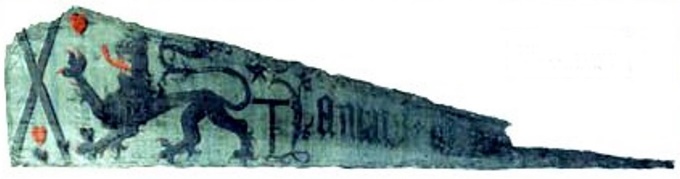
second son Archibald was only 10 when he carried his father's standard
at the battle of Otterburn, and after receiving the title of 1st Laird
of Cavers he later defended it with success against the repeated attacks
of the English. The standard is still preserved at The National Museum
of Scotland in Edinburgh. Historians have erroneously stated that it was
the flag of Percy which James captured before Newcastle, but the trophy
which his father won in that encounter, and which has been always
preserved along with the aforementioned standard, was a small ornament
of silk, with the cognisance of the Percys embroidered in small pearls,
which was attached to the end of Percy's lance when it was seized.
In addition to the lands and barony of Cavers, ‘Black’ Archibald as
he was known also inherited from his father the Heritable Sheriffdom of
Teviotdale which was a hereditary shrievalty title which would pass to
all the Lairds of Cavers until the office was abolished in 1745.
However, his aunt Isabella, the Countess of Mar, had moved into Cavers
upon the death of her young brother and declared it her own, presumably
because of Archibald’s minority. As Archibald grew older, pressure
increased on Isabella to recognise her nephew as the rightful heir so,
in part due to the support he was receiving from other Black Douglas
family members. Eventually she was forced to acknowledge the absence of
any charter to support her claim, so vacated Cavers in 1405. However,
the charter of resignation that Archibald obtained from Isabella that
year relating to both the lands and the Sheriffdom had been procured
without royal sanction, so by neglect they recognosed to King Robert III
and were in turn conferred by him on Sir David Fleming of Biggar that
same year. But as Fleming did not long survive that date, it does not
appear whether he ever took possession. Several years later Sir
Archibald sought to have his aunt’s original charter ratified, but to
obtain it he had to travel on 30 November 1412 to the Archbishop’s
Palace in Croydon where King James I of Scotland was being detained but
permitted to exercise certain functions of government. Sir Archibald had
married Margaret Gray, daughter of Duncan Gray the Sheriff Depute, and
they had four children.
The eldest son would become known as Sir
William 'Arkinholm' Douglas, the 2nd Laird, and in 1432 he had a like
charter from King James I, then in the final years of his reign. He was
a Warden of the Middle Marches (responsible for the security of the
border between the two nations), and took part in the historically
important Battle of Arkinholm was fought near Langholm on 1 May 1455
during the reign of King James II of Scotland. Although a small action
involving only a few hundred troops, it was the decisive battle in the
civil war between the King and the Black Douglases, and as the King's
supporters won it was a significant step in the struggle to establish a
relatively strong centralised monarchy in Scotland. As a direct
consequence of their defeat, the Black Douglases were attainted, and
their remaining castles fell. They then ceased to be a serious force in
Scotland, and to make matters worse from their perspective, the Red
Douglas Earls of Angus were awarded the earldom of Douglas, along with
the cherished ancestral lands of Douglasdale.
Sir William wed
twice; firstly to Margaret Stewart of Lorne who bore all his children,
and following Margaret’s death (aged just 32) to Catherine Colville. He
died in 1464 and was succeeded by his only son Archibald. His eldest
daughter Janet married John Ainslie of Dolphinton and their daughter
Margery married her cousin once removed, Mark Kerr of Auldtounburn and
Cessford. William’s other daughter Margaret and her husband Andrew Kerr
had two sons and a daughter and were the founders of the House of
Roxburgh.
Sir Archibald ‘Keeper of the Hermitage’, the 3rd Laird,
was one of the commissioners for settling a truce with the English in
1457, and also a Warden of the Marches in 1459. Archibald was also
Keeper of Hermitage Castle, Bailiff of Liddesdale and Sheriff of
Roxburgh and Teviotdale. In 1464 he was given the symbolic honour of
delivering a red rose on behalf of the Crown at the Feast of John the
Baptist, which is a tradition sometimes associated with the blood of
martyrs and the passion of Christ, and linked to the celebration of
John’s birth on June 24th. Upon Sir Archibald’s death in 1486 he was
succeeded by his only son William, whose mother’s identity remains
unknown. Archibald’s first-born was Elizabeth, who would marry Sir
Alexander Stewart, 3rd of Garlieston, were the ancestors of the Earls of
Galloway. Their son Alexander Stewart would fall at Flodden leaving a
son and 16 daughters.
William ‘The Sauchieburn' Douglas, 4th
Laird, was born in 1450 and aged just 14 when he married Margaret Ramsay
of Dalhousie. Margaret was the daughter of Sir Alexander Ramsay of
Dalhousie (and a great great grandson of George Douglas, 1st Earl of
Angus) who had died at Flodden (along with 200 men from the Hawick
locale) on 9 September 1513. Sir William, a
Warden of the Marches in his
father's lifetime, was called by King James III to assist at the
Parliament at Edinburgh 29 January 1487. The following year James
Douglas, 9th Earl and last of the Black Douglas line, wrote to him from
his cell in Lindores, exhorting him to continue loyal to the King. Being
at the Battle of Sauchieburn on 11 June 1488, William was outlawed by
the victorious party and temporarily forfeited ownership of the estate,
but obtained a
remission for himself and his friends dated 10th February
1488. A protection was given under the Privy Seal in 1502 to William
Douglas of Cavers, knight, and William his first son, who was provided a
safe pass Denmark.
Six years before he died, Sir William was
noted in the following charter:
1500 May 26. CHARTER by Sir WILLIAM
DOUGLAS of Cavers, in favour of ANDREW KER of Over Crailing, of the half
part of the lands of Feoroule. A notarial copy, on paper, made by
PATRICK ATZENSONE, Notary.
To all who shall see this charter, William
Douglas laird of the barony of Cavers knight and sheriff of Roxburgh,
Greeting in Godeverlasting. Know that I have given, granted and by this
my present charter confirmed, as I by this my present charter give,
grant and confirm to an honest man Andree Ker of Uvir Crailing all and
sundry the land of the half part lands of Fewruele with tenants,
tenandries and service of free tenants of the foresaid half part lands
with pertinents, lying within the barony of Cavers and sheriffdom of
Roxburghe. ... Paying therefore annually the said Andrew Ker & his heirs
the annual suits at the courts of the foresaid barony of Cavers,
Reserving to me and my heirs the marriage of the heirs of the said
Andrew Ker in place of all other exactions secular service or demands
which could in any way be exacted or required for the half part lands
with pertinents tenants tenandries and service of free tenants. In
witness hereof my seal is appended to this my present charter
At Jedworth the 26th day of May 1500 before these witnesses George Douglas
and Sir Walter Douglas vicar of Hassenden my uncles and Archibald
Douglas. Copy certified by Patrick Atzensone, Notary public |
|
As
his son William had pre-deceased him, Sir William was succeeded by his
second son James 'Ancrum Moor’ Douglas, the 5th Laird, who successfully
fought with the Scottish army in skirmishes at Bowset near Jedburgh. In
particular though, he was at the battle of
Ancrum Moor on 27 February
1545, which put a temporary end to English incursions in the Scottish
borders and lowlands. He married Elizabeth ‘Marie’ Murray of Falahill,
daughter of John “The Outlaw” and ancestor of the Murrays of Philiphaugh,
and their second son William was 1st of
Friarshaw,from whom are descended the Douglas families in Sweden and Germany. However it was their
eldest son also called James who would inherit upon his father’s passing
on 28 September 1545.
James ’Pinkie’ Douglas, 6th Laird, married
Christian, daughter of Sir Andrew Ker of Ferniehirst, and had three
sons, William his successor, James (a reverend at Cavers) and Thomas who
was thought to be an under-vassal of Walter Scott 1st Lord of Buccleuch,
and therefore liable to be called out by him on demand to the aid of
William Armstrong of Kinmont, better known as "Kinmont Willie", the
notorious border reiver (raider and outlaw). James fought at the
Battle
of Pinkie near Musselburgh on 10 September 1547, which was the last
major hostile engagement between the independent kingdoms of Scotland
and England before the Union of the Crowns in 1603. The decisive English
victory led to Mary, Queen of Scots, being sent to France for safety and
eventually marrying the French Dauphin, thus renewing the Auld Alliance.
James died in July 1558.
Sir William 'Reidswire' Douglas, 7th
Laird, married Euphemia, daughter of Sir William Kerr of Cessford.
Douglas's Peerage (article "Cranston") begs to differ and asserts that
Sir William married Elizabeth, daughter of Sir William Cranstoun.
However, a charter extant contains the names of James Douglas fiar of
Cavers, William Douglas his father, and Euphemia Kerr his mother, and in
fact it was his son James who was the Douglas in question. Sir William
fought at the Raid of Reidswire on 7 July 1575 and was denounced as a
‘rebel’ for doing so. He died later that year.
Sir James 'The
Rebellions Laird' Douglas and 8th Laird had a charter in 1576 under the
Great Seal on his father's “resignation”, reserving liferent etc.
Although “The Douglas Rebellion” had effectively been quashed following
Arkinholm, there were still those within the Douglas ranks who were keen
to settle old scores on behalf of their ancestors, but Sir James gained
a reputation for quickly suppressing any disturbances. He married first
per a contract dated 1 June 1580, Margaret, daughter of Sir John
Cranstoun of that Ilk, by whom he had William and Beatrice who was
possibly married to Lord Fleming, 1st Earl of Wigtown; and second after
Margaret died aged just 38 in 1590, Anne a daughter of Sir James M'Gill,
by whom he had James, Master of Cranstoun,
Thomas, 2nd bailie of
Edinburgh (who was buried in Greyfriars Church and has a
memorial stone
in Merchiston), as well as a daughter Lucy who married John Maxwell. An
elder sister to Lucy, Elizabeth ‘Ellen’ who married Sir William Eliot of
Stobs and subsequently Sir William Douglas of Kelhead, was conceived
with an unknown mother between James’ two marriages. James died in 1612
and was succeeded by eldest son William.
Sir William ‘Covenanter
and Loyalist', the 9th Laird, was deeply engaged on the Parliament side,
and was one of the commissioners from the Scottish army to treat with
Charles I in 1639. He is frequently mentioned in Baillie's Letters as
"the Sheriff of Teviotdale." He commanded a regiment of horse and
defeated a body of men raised from Richard Graham's lands in the north
of England, who were on their march to join James Graham, 1st Marquess
of Montrose, in 1646. This had placed Sir William in a delicate
position, seeing that nine sons of his three sisters had not long fallen
on 9 May 1645 at Auldearn in Nairnshire when Montrose’s Royalists had
defeated the Covenanters in one of the major battles of the Scottish
Civil War. In 1648 Sir William refused the Engagers' commission,
intended to establish Presbyterianism in England for three years, in
exchange for Scottish military aid to restore Charles 1st’s authority.
William married Agnes ‘Ann’ Douglas of Whittingham, and left three sons -
Archibald his heir, John, head of the Douglases of Garvald, and Richard,
an army Colonel who also served as an advocate. As Richard is not listed
as a son in 1676, it had seemed likely that he was killed at the 'Storm
of Dundee', in 1651, however there are future reasons to doubt this, and
he is reputed to have had a son John who married an Elspeth in 1666. He
also may have been the same Richard Douglas advocate who contributed to
the purchase of the Merchiston memorial for the aforementioned Thomas
Douglas (McGill). William and Ann also conceived a daughter Helen, who
married Sir William Bruce of Stenhouse. William died about 1658; the
lineage being continued by his eldest son Archibald.
Sir Archibald ‘Covenanter' Douglas, 10th Laird, had a command in the Army of
the Parliament, and was Curator for James Douglas, 12th Earl of Angus.
In 1658 he purchased the lands of Denholm & Spittal from William Lord
Cranstoun, whose ancestors had held them in feu from the family of
Cavers since they were first granted by charter of Thomas, Earl of Mar.
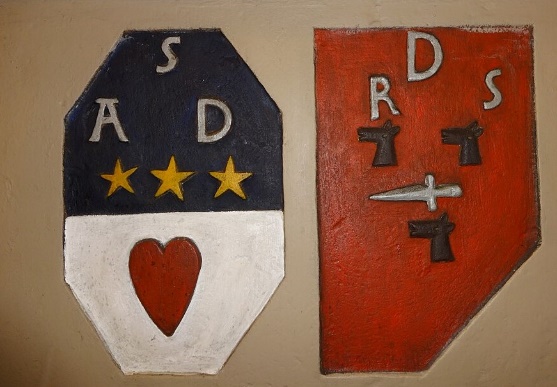
He married Rachel, 17-year-old daughter of Sir James Skene of Halyards,
President of the Court of Session, and their united arms may still be
seen rudely carved over the kitchen chimney at
Westgate Hall, Denholm,
built shortly before her death in 1663. Like her husband, Rachel was
also born in 1612, and they went on to have eight children together.
Their third son James was murdered by
Andrew Rutherford in 1674, an
event preceded by the death of his elder brother Thomas ‘Collonal’
Douglas.
The eldest daughter was Anna, and in 1652 she married
Robert Bennet of Chesters, which is located on the banks of the Teviot
near Ancrum. Bennet was a religious man who had made a personal covenant
with God which he renewed each year on 16 January for as long as he
lived. His wife's reputed extravagance brought him into troublesome
debt, but he is said to have faced all such tribulations in a noble
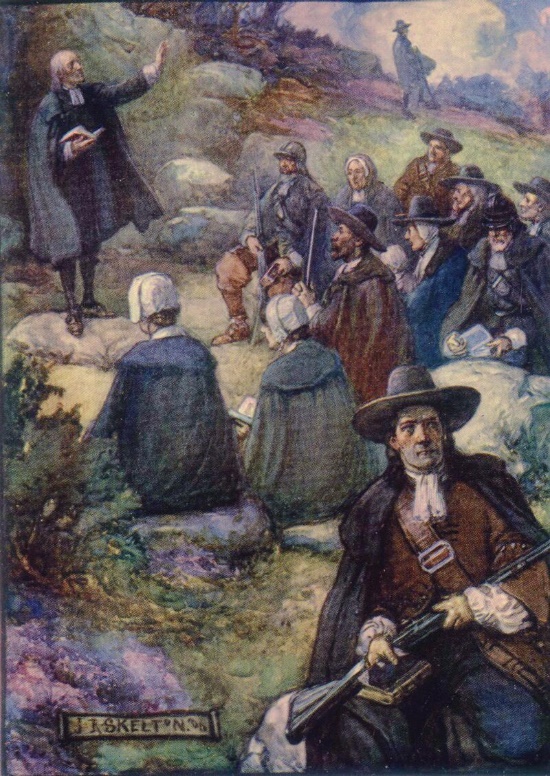
spirit. In 1676 he was declared an outlaw and imprisoned on Bass Rock
because he had attended conventicles by Reverend John Blackadder and
other prominent Covenanters. He was given leave to attend Anna when on
her deathbed on 18 February 1678 and thereafter put into house arrest on
13 June 1678.
Sir Archibald was succeeded by his eldest son Sir
William 'For Christ’s Crown and Covenant' Douglas, the 11th Laird, who
was born in 1630 shortly before the introduction of the religious
reforms (often termed “innovations") that were introduced by Charles I.
These were a major source of conflict during his reign and sought to
impose a more ritualistic and ceremonial form of worship, particularly
through the introduction of a new Book of Common Prayer in Scotland.
This was met with strong opposition and directly led to the formation of
the Scottish Covenanters movement in February 1638 when formal agreement
was reached to defend Presbyterianism and reject the King's interference
in religious matters. “For Christ's Crown and Covenant" was the motto
and battle cry of the new movement who believed in the sole headship of
Christ over the church. The phrase signified their commitment to
Christ's authority and the covenants they signed to uphold Reformed
Presbyterianism. The phrase was famously displayed on the Covenanters'
blue battle flag, first used in 1639, and their movement is still active
in the present day. When Charles II, the eldest surviving son, succeeded
his father to the throne in 1660, he tried to balance his personal
Catholic leanings with the strong Protestant sentiment of his kingdom,
but came under considerable pressure from Parliament to enforce
conformity with the established Church of England.
It was
against that background that Sir William was summoned to Edinburgh on 3
August 1676 to appear before the Privy Council of Scotland for not
complying fully with Parliament’s religious policies, and as a result he
was deprived of the Sheriff's Office. Sir William died a few months
later in December 1676, aged just 46, leaving five sons - 1st, William,
his heir; 2nd, Archibald, who would go on to succeed his elder brother;
3rd, John; 4th, James; 5th, Thomas, ancestor of the present family of
Cavers. There were also two daughters - Anna, who married Sir John
Murray, 3rd of Philliphaugh and Euphemia Douglas who wed Sir James Scott
4th of Gala, a significance being that their eldest son Hugh, 5th of
Gala, had several daughters; two of whom would marry nephews of Euphemia.
Sir William had married the mother of at least five of his children,
Katharine ‘the Good Lady Cavers’ and daughter of Thomas Rigg of Athernie
in 1659 and notice of her sufferings during this period of persecution,
especially after the death of her husband, may be seen in Wodrow,
Crookshanks, and other histories of the times. With a young family to
raise on her own, Katharine became even more obnoxious to the Government
than her late husband by insisting that her children be educated in
accordance with the religious principles of The Reformed Church of
Scotland. This would lead to them being forcibly removed from her and
placed in the care of various family-connected tutors. Even this failed
to quell her resistance, finally culminating in her imprisonment in
Stirling Castle from 13 November 1682 to 24 December 1684, apart a
three-month period commencing July 1683 when she was temporarily
released on bail for the recovery of her health. A more detailed account
is found in “The Ladies of the Covenant”, and her permanent freedom only
came about when her eldest son William, returning from his education
abroad, gave a bond that she should conform or leave the country within
fourteen days. Never for one moment wavering in her principles of
non-conformity, she duly went to reside in England. She never lost her
love for Scotland though and had a stated desire to be buried at Cavers
wearing her cherished silver chaplet. Two hundred years later, when
preparing a site for another prominent family member, workmen observed a
skeleton which bore a chaplet around its head.
Although not
identified in the family tree, it is worth noting that another
Covenanter, Samuel Douglas of Cavers Parish, was amongst the prisoners
of war who had been captured at the
Battle of Bothwell Bridge on 22 June
1679 and who endured imprisonment in Edinburgh before drowning on the
infamous Croune sinking later that year on 10 December whilst being
transported to the American Plantations. All were Covenanters, and more
than 200 of them drowned or were murdered, depending on one’s point of
view.
Sir William 'The Dragoon', 12th Laird, was only 11 when
his father died. As a child he had been educated at home by James
Orsborn, a non-conformist Presbyterian, which was in defiance of a Privy
Council proclamation and resulted in his father’s appearance before
them. A few months following his father’s death, William had been sent
to schools in Dalkeith and then Edinburgh. However, following his
mother’s appearance before the Privy Council on 27 January 1680, William
was removed from his mother’s influence and sent abroad to travel the
Continent accompanied by his tutor Mr. Robert Wylie, who later became
minister of Hamilton. According to Dalrymple’s Memoirs, vol. i., part.i.,
pp. 122, 123, William had married a French lady whom he had fallen in
love with during his travels, but when he intended to return home for
the sake of his by now forcibly confined mother, obstacles were
interposed in the way of his wife and their child returning with him. He
was not personally restrained, but his wife and, the child, which in
consequence of its mother being a French woman was considered as
naturalized, were declared to be subjects of France, and, according to
the 10th article of the edict of Nantz were prohibited from departing
out of the realm. Sir William Turnbull, the English ambassador in
France, in a retrospective letter to Lord Sutherland, dated December 19,
1685, wrote: ‘I acquainted him [i.e , Louis XIV.] also with Sir William
Douglas’s petition for leave for his wife and child to go into England
with him. But this, he told me plainly, the king had refused; for
although the husband, being not, naturalized, might go if he pleased,
yet the wife and child were subjects of France, and should not have that
permission.’ In any event he returned to the UK without them on 24 April
1684, and soon after became commander of The Teviotdale Militia
Regiment, before being promptly warranted to disband it. in 1689 he
accepted from William III on his accession to the throne the command of
a troop of dragoons in the Scots Greys, taking the rank of Captain. He
married (or re-married) in 1690 Elizabeth, daughter of
Mr John Douglas
of Riddley, Newcastle, but they left no family. Sir William died in 1698
at an even younger age than his father at the tender age of 33, and was
succeeded by his brother Archibald. His widow Elizabeth subsequently
re-married, this time to Sir Andrew Home of Kimmerghame.
Archibald 'The Union Laird', 13th Laird, was a child initially raised by
parents with strong Covenanting beliefs. However, on account of
opposition to the court, his father had been deprived of the Hereditary Sheriffdom. His mother’s adherence to her educational principles didn’t
help matters, and this led to all their children being educated by
tutors (one of whom was a Richard Douglas, an advocate but not
necessarily the same Richard of that profession previously mentioned)
who held different beliefs. The family's status had naturally revived in
the aftermath of the Scottish Revolution whereupon the Hereditary
Sheriffdom of Teviotdale was restored. Archibald who had married Anne,
daughter of Francis Scott of Gorrenberry in 1693, succeeded his elder
brother to both the Sheriffdom and the estate of Cavers in 1698. Despite
his early Covenanter upbringing, he was very much in favour of the 1701
House of Hanover's Act of Settlement, which established a Protestant
succession to the British throne. As reward for his support of the Union
he was made a Privvy Councillor of Queen Anne in 1705, and from that
same year also held the title of Receiver General for Land Tax & Crown
rents until April 1718. These repeated successes prompted his son
William to remark with pardonable exaggeration in 1712 that "you have it
in your hands to make the Member for the county." [Source: "The House of
Commons, 1690-1715"]. He was actively engaged with the 2nd Duke of
Argyll and General George Carpenter in 1715, advancing money at his own
risk to help suppress the Jacobite rebellion when no public resources
were available. He even attended Argyll at Stirling, bringing 300
baggage horses from Roxburghshire for the march to Perth at a few days'
notice, amid the violent snowstorm which then prevailed. He acted as
curator for the Dukes of Douglas and Queensberry during their
minorities, finally represented Roxburghshire in the last Scottish
Parliament, and became Postmaster General for Scotland in 1725. He left
behind him an incredible legacy, let alone a grieving widow and a large
family, four of whom succeeded.
Archibald’s eldest son
William,
the 14th Laird, was born in October 1693 so was first in line. The Acts
of Union, passed by the English and Scottish Parliaments in 1707, led to
the creation of an ostensibly “united” kingdom called “Great Britain”,
and William took an active political role representing Roxburghshire as
a member of the new United Parliament from 1714-1715 and again from
1727-1734. An avid book collector, many of which could be found in the
Cavers House library before its eventual dismantling, he desired a third
term in office and resigned the heritable Sheriffdom to his brother
Archibald in 1742 to successfully do so until 1747. He died the
following year without issue, and it was at this point that a series of
childless marriages would begin to have a severe impact on the family
lineage.
Archibald the 15th Laird was the last heritable sheriff
of Teviotdale, as heritable jurisdictions were abolished by The
Heritable Jurisdictions (Scotland) Act 1746 in the aftermath of the
Jacobite rising of 1745 as part of efforts to strengthen the central
government's control over Scotland. As a young man he made the then
tumultuous journey to Virginia, USA, curiously choosing to depart at an
inclement time of year on 15 December 1719, with confirmation of his
safe arrival not reaching home until 20 June the following year. He
followed in his father’s footsteps by becoming Postmaster General for
Scotland in 1745. A year after succeeding as Laird, in 1749 Archibald
married Elizabeth, eldest daughter of Hugh Scott 5th of Gala (and son of
Hugh 4th who had married into the family 56 years previously), before
dying without issue in 1774. His wife Elizabeth had life rent of
Earlside and Kirkton.
Archibald’s younger brother was the
Reverend James Douglas, D.D., Prebendary of Durham, the 16th Laird.
Schooled at Eton, he graduated from the University of Glasgow, winning
the prestigious “Snell Exhibition” annual scholarship which enabled him
to undertake postgraduate study at Balliol College, Oxford. A bit of a
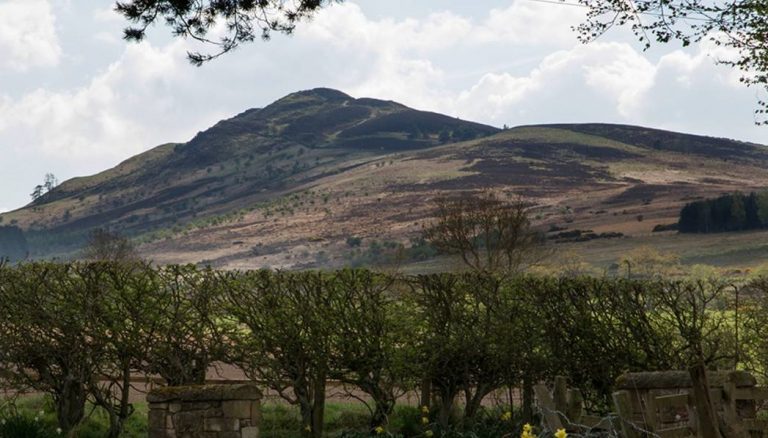
daredevil when in his twenties, he once drove his horse-coach with the
celebrated Sir James Graham of Netherby as his passenger up the
precarious left shoulder of Rubers Law (or ‘Ruberslaw’ as it’s known
locally) as far as he could go; his ascent later being estimated at some
1200 feet above sea level.
James quietened down somewhat, and
became Vicar of Kellow, Dumfriesshire in 1735 before moving closer to
home as Rector of Long Newton, County Durham in 1742. He married Jean,
daughter of Halyburton of Pitcur in 1750. On 11 October 1759 he was
installed as Prebendry of Durham Cathedral, occupying the 4th Stall with
which he had the Rectory of Great Stainton, 15 miles to the south of the
city. The Lairdship only came to James in 1774, and he died in 1780
without issue and was interred in the Eastern Transept of the Cathedral.
Before his death he made a new Entail of the Barony, thereby making
provision for various members of the family in Annuities, and in
particular daughters who were unable to succeed because the prevailing
entailment law of that time. His memory is recalled by the 'The Doctor's
Planting', 'The Cloister's' Walk of Beeches in the Deer Park and 'The
Prebend's Walk', the lower walk on the North bank between the old church
and the West Park (Pillar Park).
Next to succeed was John, the
17th Laird, a Captain in the Royal Navy which he left to join the
Merchant one, who added new lands to the estate in 1750 when he
purchased Adderstone & Midshiel from Francis Scott of Gorrenberry, his
maternal grandfather. John’s marriage in 1728 to Ann Scott of Gala (the
fourth daughter of the same Hugh Scott) was also childless, so his death
in 1786 created a problem for the family.
John’s parents
Archibald (13th) & Anne Scott could not have been faulted for a lack of
suitable heirs, as theirs was indeed a large family and John was only
the fourth of eleven sons! However, all of them died leaving no
descendants, and to the popular mind this fulfilled the curse of an old
woman. In his capacity as Sheriff of Teviotdale Archibald had been
called to the site of Hassendean Church, Denholm as workmen employed to
dismantle it and transport the remains to Roberton, near Cavers were
being attacked by irate locals. An old woman cursed both him and his
descendants, pronouncing a “judgement to heaven that the cradle should
never rock again in Cavers House". As if that wasn’t sufficient, just
for good measure her companions threw the church bell into a deep pool
of water at Hornshole Bridge.
Now, many years later that
prophecy had come to pass, and all of John’s younger brothers were
themselves deceased (including twins born three days apart, from
smallpox) by the time of his own demise aged 83. Even his youngest
brother Alexander had predeceased him in April 1780, having married and
spent his final years at nearby Whitriggs Farm. John also had two
younger sisters, as well as an elder one called Ann, making an
impressive total of 14 children in that single family.
Elder
sister Ann had begun a relationship with William Campbell, a tutor at
Cavers which much displeased her parents so the couple eloped to Gretna
Green in 1721 and were married there (this was more than 30 years before
the Marriage Act of 1754 in England made such events traditional, as
couples in England needed parental consent for marriage if under the age
of 21, whereas there were no such restrictions in Scotland), Archibald,
Anne’s father, had the final say though by disinheriting his daughter!
[Source: from a letter written by Miss Mary Alexa Campbell to an
Australia relative posted in 1915]
To fill this huge void, the
family looked back to the previous generation. Archibald (13th) was only
the second of five sons of William (11th), and whilst John & James were
borne by an unknown mother and were again without issue, the youngest
sibling Thomas was born posthumously having been conceived by William
and Katharine just four months before William’s demise. Thomas married
Jean Pringle of Haining, Selkirk in 1706, having celebrated the birth of
Andrew, the first of nine children, a year earlier. The couple resided
at Linthaughlee near Jedburgh, and Andrew was factor for several local
estates.
Like his father, Andrew Douglas never succeeded to
Cavers, but they are the direct ancestors of the present family.
Initially a merchant of Suffolk St, St Martin in the Fields, London, he
had power of attorney for Viscount Melville. In 1735 he went to St.
Lucia where his father sent him £300, and then in 1737 he went to Spain
and then the Barbary Coast with his uncle, Consul Mark Pringle, before
returning home in October 1739 when he went into business with Lord
Rutherford’s son Alexander. In 1778 he was made Paymaster of the Navy,
before dying seven years later. Following his death there was an inquiry
into the handling of navy funds, involving Henry Dundas, Viscount
Melville, Minister for the Navy. Viscount Melville was subsequently
acquitted of the charges of misappropriating Navy funds; Andrew Douglas
might have been similarly charged had he still been alive.
More
importantly for the family though was the fact that Andrew’s wife Mary
Mercer had borne him two sons soon after their marriage in 1752. The
second of these in 1755 was Archibald, who would go onto inherit
Adderstone & Midshiels in 1786 upon the death of John (17th), his first
cousin once removed. To put that act of generosity in perspective,
Adderstone farm alone was valued at £700 in 1788, which is almost
£150,000 in today’s terms.
The death of John (17th) had other
consequences too though, as Archibald’s elder brother
George (John’s
second cousin) would become the first Laird of Cavers in 110 years to
succeed. Educated at Westminster College under the watchful eye of its
headmaster Dr. William Markham, George spent a lot of his time as a
young man at the court of George IV wearing flashy and flamboyant
clothes. He had two court suits embroidered point lace, as well as a
waistcoat embroidered with tinsel sequins, jewelled to match. A further
indication of his extravagant nature (let alone disposable wealth) is
that when he travelled south from Cavers in his rather plain carriage,
he swapped it for a grand ornamented one which he kept parked at Mosspaul just south of Teviotdale purely for the purpose of displaying
his finery once he had crossed over into England. He was a Freemason and
principal Grand Master for Roxburghshire, Selkirk and Peebles, becoming
18th Laird in 1786 at the age of 32.
By an irony of fate his
wife Lady Grace Stuart, daughter of Francis Stuart, the 9th Earl of
Moray, was descended from the very same Earl Percy whom James 2nd Earl
of Douglas had decisively defeated at Otterburn. Grace was said to be
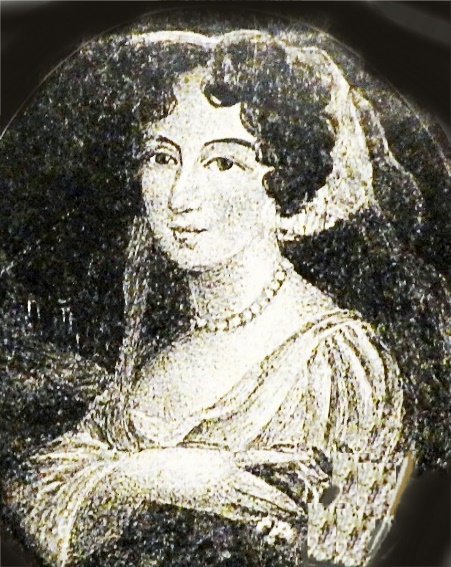
multi-talented as the following edited tribute written by her
granddaughter Emma reveals: “She set a poem Red Red Rose [one of several
written by her son James] to music…..was highly gifted by nature and had
an education far beyond that of a woman of her position of her day…..she
was a good musician and sang quaint nursery ballads to her grandchildren
while playing a harp belonging to her mother…..she was well read in
literature and tried to encourage her grandchildren in Shakespeare,
Pilgrim’s Progress and Scandinavian mythology…..she had learned
conchology and mineralogy from text books (note - possibly passed down
from James 16th’s time at Balliol College, Oxford)…..and was conversant
in French, German & Italian literature and had studied Hebrew, reading
daily a chapter of Genesis or Exodus…..she was a good miniature painter
both on ivory and vellum…..was President of the Hawick Ladies Clothing
Society, herself a thoroughly good needle woman who also worked
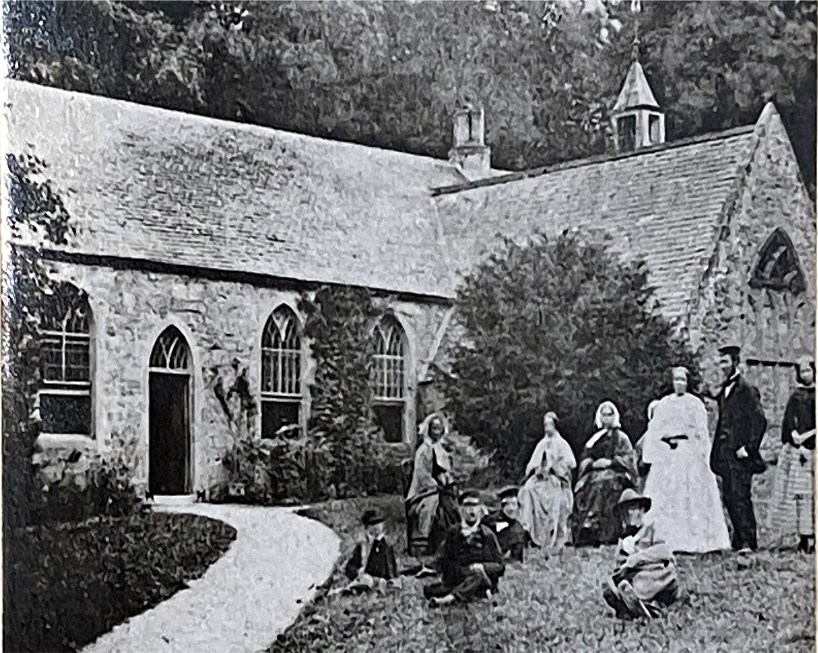
crochet…..she instituted a school in the Auld Kirk for children in the
neighbourhood and arranged it so they should have dinners of Broth and
Bread. This final act of kindness occurred in June 1843, only three
years before she died.
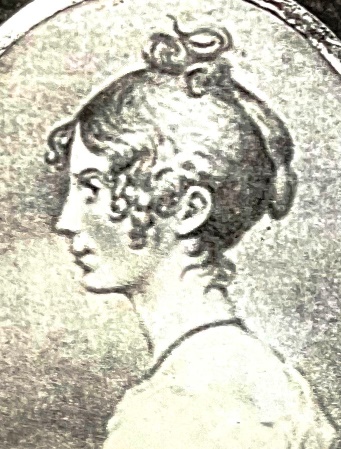
Together George and Grace produced two
sons and a daughter following their marriage in 1789. Jane would die in
Devonshire shortly after her 16th birthday, when her mother had taken a
miniature portrait of her, and which her father kept on his person until
the day he died. Two sketches of her also exist, one in pencil and the
other in watercolour which was framed in Cavers House; a fair young head
with a coral necklace. Jane was buried in the churchyard of St Margaret
and St Andrew, Littleham near Falmouth in close proximity to Lady
Nelson.
James’ elder brother Francis ‘Frank’ James Douglas was a
Lieutenant in the 2nd Battalion of the Coldstream Guards and in 1815
during a pause in the battle of Waterloo (where he won two medals) he
picked heartsease (wild pansies) from the walled garden at nearby
Château d'Hougoumont which he sent to his mother, Lady Grace. Sir Walter
Scot when visiting her, told her that 'where Frank had gathered Laurels,
she had gathered Heartease' and wrote this on the paper they were
wrapped in. This quote was a poetic way of saying that while Frank was
achieving public recognition and success (gathering laurels), his mother
was experiencing a different kind of fulfilment, one focused on personal
contentment and affection (gathering heartsease), so it implies a
contrast between outward achievement and inner happiness. Frank died in
London six years later in an accident when his horse slipped on a
pavement, causing its rider’s head to strike the stone kerb. Somewhat
ironically, the horse in question had been gifted to Frank by his mother
upon his return from Waterloo, but there was no sense of recrimination
towards the animal, and it lived out the remainder of its days
contentedly grazing on what would become the Pillar Park area of the
estate, adjacent to the West Lodge Wood.
James was the first-born
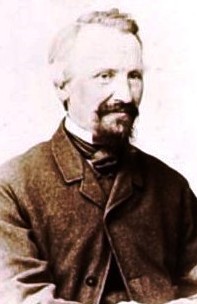
though and succeeded his father in 1814, becoming 19th Laird at the age
of 24. James, a frequently published author, specialised in religious,
world history and social advancement books. He was also a philanthropist
who established a school for the arts in Hawick in 1824, and having
spent time in Florence he also paid for a 1849 printing in Rome of the
New Testament. In particular, James was a prominent abolitionist and
played a significant role in the campaign to abolish slavery. His 1833
book “Address On Slavery” helped broaden the anti-slavery movement by
appealing to a wider audience. Realising that he had to persuade
individuals to oppose slavery not only on moral grounds, but also based
on utilitarian principles, the publication highlighted that not only
enslaved Africans, but also slave owners and people in Britain suffered
because of the negative effect that the increasing stigma attaching to
slave labour was having on trade and commerce. In the 1860s James gave
bi-weekly Grand Soirees in the Subscription Rooms of the Cowbyres
Mission Library in Buccleuch Street, Hawick. “What we want,” he said,
“is love: love between all ages and conditions of men.”
In 1820
James had married Emma Carnegie of Pitarrow, daughter of Sir David
Carnegie and his wife Agnes Murray Elliot, whose mother was Eleanor
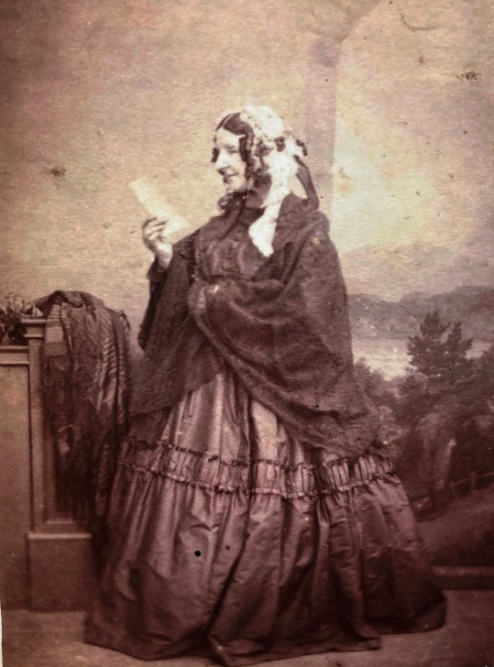
Elliot née Plumstead from Philadelphia, USA. As well as being the mother
of seven children, Emma was also a very talented artist and many of her
paintings and portraits survive to this day. She died in 1882 at Midgard
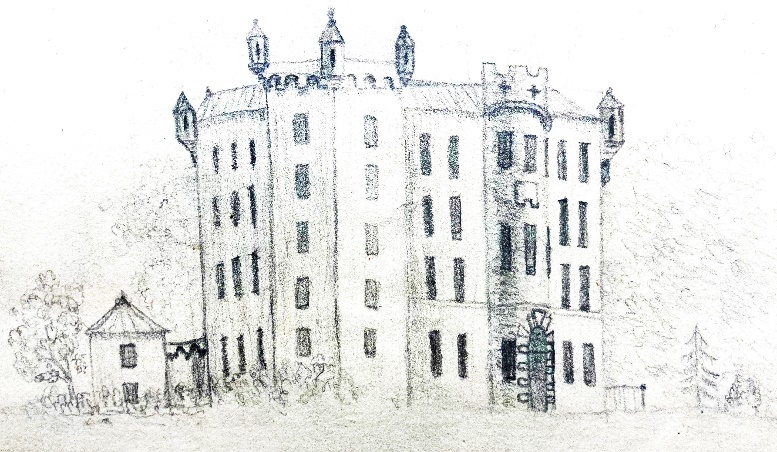
(the impressive 13-roomed Dower house she built in 1863) and is interred
in the Grange Cemetery in Edinburgh. Five of the couple’s flock were
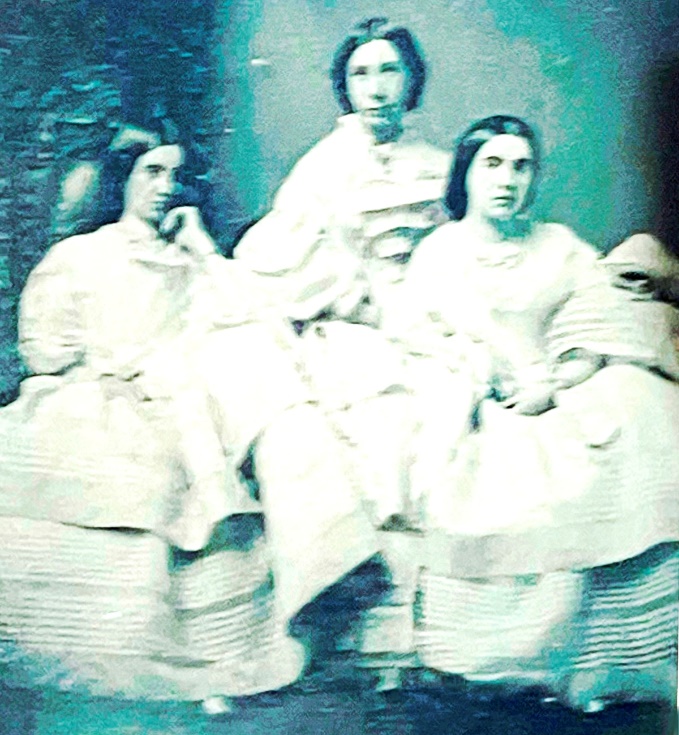
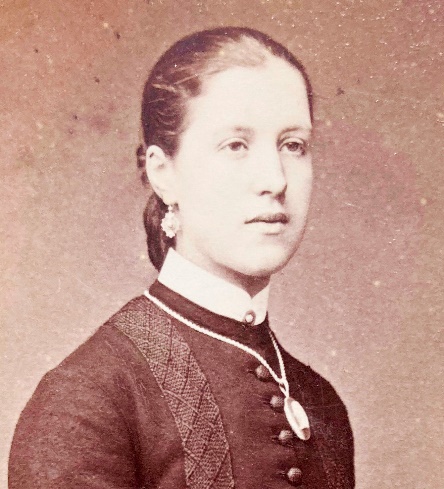
daughters, Agnes, Mary, Emma, Ellen & Lucy. More will be said about Mary
in due course, but it’s appropriate to note at this juncture her obvious
admiration for her mother – “she had a good voice and
accompanied herself on guitar [actually a mandolin] as well as on the
pianoforte, her singing giving pleasures to many who heard her…..she
also had considerable talent in drawing and sketching, with crayon and
watercolour foils, both heads and landscapes…..she was a good
needlewoman, making clothes for poor children and infants, as well as
fancy work of the period, netted silk purses, Berlin work and beadwork,
and bookmarkers and needle-cases as small souvenirs for her friends.”
Emma can therefore be seen to share many of the interests of her
mother-in-law Grace, even following her example by teaching a class at
the school held in the Auld Kirk. She was also very fond of animals,
especially cats, to such an extent that comparatively strange ones would
come out from their homes to greet her; something remembered long
afterwards by the cottagers who owned them.
Also worthy of note is the marriage in 1859 between Ellen and Rear Admiral George Palmer,
which whilst inconsequential if viewed in isolation would have a
significant knock-on effect in a few years’ time.
The youngest son
Stuart, a Lieutenant in the 82nd Regiment, died of cholera in 1858
whilst serving in the army in India and is interred there. It’s a moot
point now but had Stuart not succumbed to the disease then the male line
might not have failed.
Stuart’s demise left first-born James in
splendid isolation as the only surviving male heir. He was educated at
home under his father’s direction, sharing his literary tastes and
interest in religious work. Young James had originally wanted to marry a
Swiss lady, but his parents forbade it and in those times their word was
‘law’ by threat of being disinherited. He is then supposed to have
stated that in that case he did not want to marry anyone but, when his
parents persisted, he said he would simply marry the first name on their
list of potential suitors. This was his cousin Mary Graham Agnew,
daughter of Sir Andrew Agnew, seventh baronet of Lochnaw, and indeed
their wedding took place in 1858. James, still bitter about the
disappointing end to his “Swiss relationship” never consummated it
though, and their marriage was an entirely loveless one purely of
convenience with James showing no interest in it whatsoever, living
apart from his wife. Three years later he succeeded his father and
became the 20th Laird, but in retrospect it should surprise no-one that
with James’ full knowledge of the consequences of his actions (or more
properly a lack of them) the male line of this dynasty was about to
become extinct.
The eldest of James’ sisters was Agnes, married
to James Henderson, but she was yet another in a long line to die
without issue, joining her mother in Grange Cemetery. Her younger sister
Mary had wed the splendidly named William Elphinstone Malcolm in 1857.
She produced a daughter in 1859 but tragically died in the apartment
house owned by her father at 34 Moray Place, Edinburgh having developed
serious complications nine days after giving birth to her only child who
would share her name. The Malcolms of Eskdale originated in Fife, but
their progeny had spread as far south as the hamlet of Burnfoot, near
Langolm, and although William married again in 1866, he had no more
children.
Thus, when her uncle James died in 1878, Mary’s
daughter Mary Douglas Malcolm inherited the great estate of Cavers
becoming its 21st Laird; an event which also resulted in the restoration
of her Douglas surname; thereby giving her the slightly peculiar
identity of Mary Douglas Malcolm Douglas. The following year she married
Edward Palmer, briefly with the Sussex Artillery at Lewes and then a
Captain in the 1st Battalion of Rifle Brigade who had served part of his
commission in India at Meerut, Delhi and Ambala in the early 1860s
before retiring from service in 1870 and would later become Justice of
the Peace for Roxburgh. Descended from the Palmers of Sullington in West
Sussex whose ancestry dates to 1781, their lineage may be traceable to
the Tredcrofts of Horsham. Of relevance here is the aforementioned
wedding of Mary’s aunt Ellen to George Palmer in 1859, the year of
Mary’s birth, as Ellen’s husband was Edward’s elder brother, so it’s
highly likely that Mary was known to Edward many years before their
troth.
Edward had no entitlement to shared ownership of the
entailed estate of Cavers, so he integrated the Douglas name into his
own; the Estate being a Barony, and this particular Douglas line
deriving from an Earldom. That protocol also resulted in his new bride
now having a further extension to her name, meaning that henceforth she
would be called Mary Douglas Malcolm Palmer Douglas. Several years
beforehand Edward was rumoured to have had a “notorious affair”, but
this seems to have been successfully hushed up as news of it doesn’t
appear to have found its way into the public domain. Nine months later
they produced a son Archibald who was heir to both Cavers and Burnfoot,
followed two years later by his brother Malcolm. Being an army man,
Edward used to march around the estate exhorting the workforce to work
harder, and despite their increased efforts it appeared that nothing
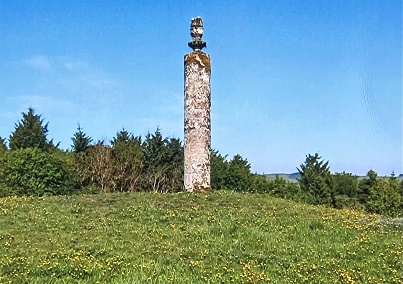
they did would ever please him. One of them suggested that they should
build two rounded pillars at the fine gate where the road through the
grass park entered West Lodge Wood. They managed to erect one of them
before being discovered by ‘Cappie’ as Edward was casually known, and in
a fit of anger for not being consulted on this work he ordered it to be
dismantled, with the stones instead being used to build a pillar on a
nearby mound. Thereafter, this part of the estate was known as The
Pillar Park. Sadly, with his back partly paralysed in an accidental
fall, Edward was confined to a wheelchair in later life, and upon his
death in 1933 was interred at Westerkirk on the Burnfoot estate.
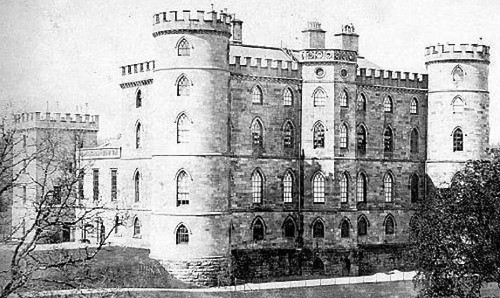
Mary was responsible for the partial rebuilding and extension of
Cavers House from 1886-1888. A devout Christian she also joined the
British-Israel movement upon its formation in London in 1919. It has no
connection to Judaism whatsoever but is an entirely orthodox belief
based on Biblical interpretation and translation that the people of the
British Isles are direct descendants of the Ten Lost Tribes of ancient
Israel. This theory has been widely refuted by scientific and historical
research, but the current British-Israel-World Federation continues to
promote this belief. It’s entirely possible that Mary’s subscription to
this faith passed down to her from her great grandmother Lady Grace’s
Hebrew bible studies. After her husband’s death Mary preferred to live
at Burnfoot, where she also outlived her eldest son Archibald. Perhaps
recognising that her own time was nigh she spent her final days residing
at Cavers, dying in 1949 aged 90.
It should be noted that the
Palmer Douglas successors liked to use 'of Cavers', and although now a
moot point it is unclear whether this was ever authorised by the Lord
Lyon.
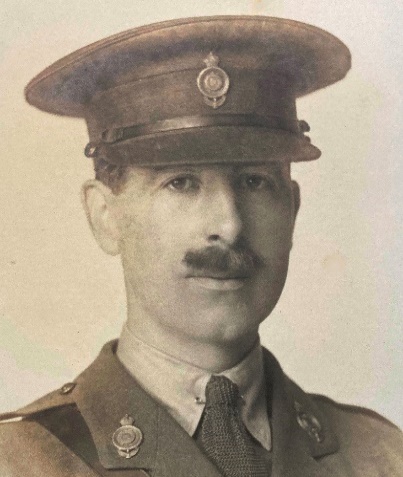
Mary’s elder son Archibald, known as 'Archibald the
Younger', initially attended the prestigious Charterhouse school in
Surrey before attending Trinity College Cambridge, as indeed did
his younger brother Malcolm who died a couple of weeks short of his 20th
birthday. When Archibald attained his 21st birthday, he became involved
in the day to day running of Cavers, but in Scotland the legal age for a
male to inherit an entailed estate was 25 years old. This was
established by the Entail Amendment Act of 1848, which stipulated that
an heir of entail born on or after 1 August 1848, needed to be of full
age (25) to acquire the estate in fee simple. For heirs born before that
date, the consent of the next heir was required, who also needed to be
at least 25 years old. As Archibald was born in 1880 his right of
succession would be automatic, but it meant he would have to experience
four years of on-the-job learning. When he finally became 22nd Laird in
1905 he voluntarily agreed that his mother should continue to hold the
Lairdship, but now jointly with him. Deemed medically unfit for active
service in the Great War (as World War 1 was commonly known), he was
made Captain of a motorised unit transporting senior Army Officers
within the UK. Thereafter (like his father) he became Justice of the
Peace for Roxburgh and kept himself busy by also serving on the county’s
Roads and Transport Committee amongst several others. Archibald married
Maria Anna Emily Kuehn of Hampstead in 1920, and she bore him a son
James in 1922, followed by a younger sister Angela in 1924 and finally
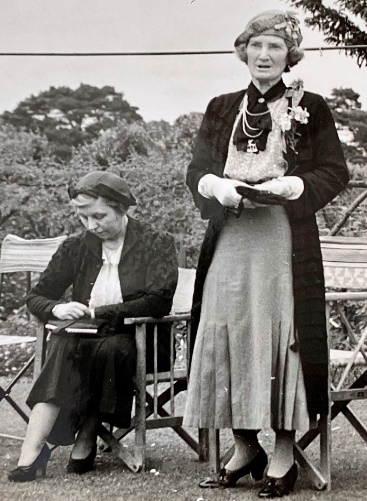
his young brother John in 1929. Maria, said to be an excellent cook,
readily entered into estate life and was an active supporter of
charitable causes as well as being a member (and President) of the
recently formed Scottish Women's Rural Institute.
Archibald did his level best to maintain both the Cavers and Burnfoot
estates but was hampered by low farm incomes and heavy debt which had to
be secured over his mother’s Life assurance policy. A keen gardener and
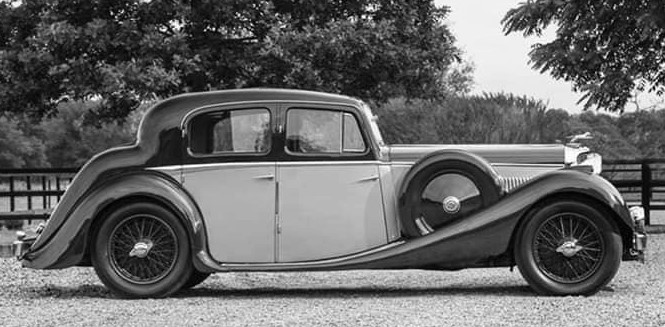
reputed to be an expert forester, he was presented with a Humber 16/60
five-seater saloon by his wife’s family as a 50th birthday present in
1930. However, it proved to have a thoroughly unreliable engine which
caused him no end of bother, so he replaced it in 1937 with a 2.5 litre
series 2 Swallow Sidecar Jaguar sports saloon (the first car to bear the
Jaguar name before the company officially changed its name to Jaguar
Cars in 1945) which became his pride and joy. Following World War 2, the
UK saw a surge in socialist sentiment, culminating in the Labour party's
landslide victory in 1945 and the establishment of a welfare state.
This, combined with the dismissal of Churchill as Prime Minister was a
cause of disillusionment for Archibald and his health began to fail.
A joyous event did occur simultaneously at Cavers and Midgard in
1946 though. Until then carbide lighting (acetylene gas lamps) had been
the only physical source of illumination on gloomy winter days and
nights, but finally both properties were connected to the National Grid,
more than 50 years after Edinburgh had first experienced the wonders of
electricity. This event persuaded Archibald that he should move back
into Cavers House from Midgard, and whilst this was a source of great
sadness for his wife Maria who loved Midgard, for his sake she did her
best to hide it. However, Archibald would have little time left to enjoy
all the modern conveniences that were now at the estate’s disposal.
Following the death of her uncle James (20th) in 1878 Mary Douglas
Malcolm Palmer Douglas had become Cavers next Laird so when she died in
1949, aged 90, the death duties payable on her estate were very
detrimental to already struggling family’s fortunes. In 1894 large
estates attracted a tax of 7.5%, and by 1930 that had risen to nearly
40%. However, in the aftermath of the Second World War it rose to 65 per
cent, and then with impeccably bad timing in 1949 Sir Stafford Cripps,
the Labour Chancellor, raised the top rate to a crippling 75%. There had
been just about sufficient funds to replace two Clydesdale horses and
associated trailing implements with an early Land Rover and a Nuffield
tractor, whilst a McConnell Hedgecutter helped maintain all the estate’s
hedgerows and proved to be a wise investment by paying for itself with
contract work.
Mary’s elder son Archibald (with whom she shared the
Lairdship) had pre-deceased her two years earlier, so her eldest
grandson James inherited Cavers (aged 26 so just over the legal age to
do so), whilst her youngest John received Burnfoot. When Mary originally
inherited it from her husband William in 1907, Burnfoot was at its
pinnacle of prosperity. There were farms at Burnfoot, Douglen and Craig
but due to his advancing years, in 1881 William had leased them to Mr J
C Little. Two World Wars and a depression had greatly reduced their
worth, so when John inherited Burnfoot in 1949 he found the main house
in a dilapidated state. Dry rot had set in, so John pulled the whole
building down and made good use of the rubble to fill in the cellar. He
similary demolished existing structures at Douglen, before selling Craig
Farm two years later to Little’s son James. John married Anne Johnston
in October 1961, and the couple moved into Pink cottage which was
adjacent to the main house. In March of the following year, he sold the
Burnfoot main house to Colonel Robertson McIsaac, and then two months
later he disposed of its farm to the Buckley family, in whose occupancy
it remains. With his wife Anne expecting the birth of their first child,
the couple upped sticks to Launceston in Cornwall, but before doing so
he built a brand-new cottage on the site of the original Douglen
building, so that his mother might live out her final days there. Maria
died in 1967, thereby ending the Malcolm family’s 232-year connection
with the estate.
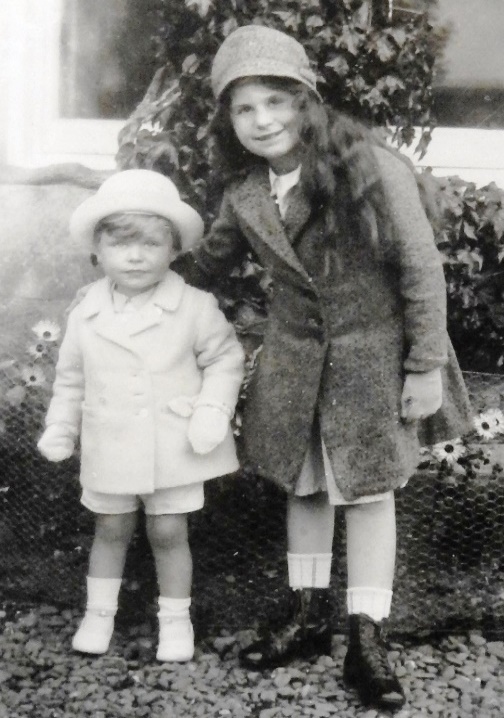
During World War 2 John’s elder sister Angela had
tried to join the RAF but was turned down on grounds of ill health and
so joined the Red Cross instead, initially being paid £3 per week to
work in the Wounded, Missing and Relatives Dept. in Belgrave Square in
London. However, being in her late teens at the time, she longed to work
among people more her own age and successfully applied for a transfer to
the Headquarters Car Pool. She drove for many famous passengers,
including Lord & Lady Mountbatten as well as Lady Churchill. On one
occasion she even met Queen Mary, and as the monarch was known to be a
stickler for etiquette, Angela curtseyed to her, loudly tearing a seam
in her skirt as she did so! She continued in that role upon conclusion
of the war, taking Red Cross delegates to functions at various palaces.
The drivers were very much appreciated by royalty and were often invited
inside, resulting in Angela meeting the Duke & Duchess of Marlborough’s
daughter Lady Caroline at Blenheim, and King George VI and Queen
Elizabeth at Buckingham.
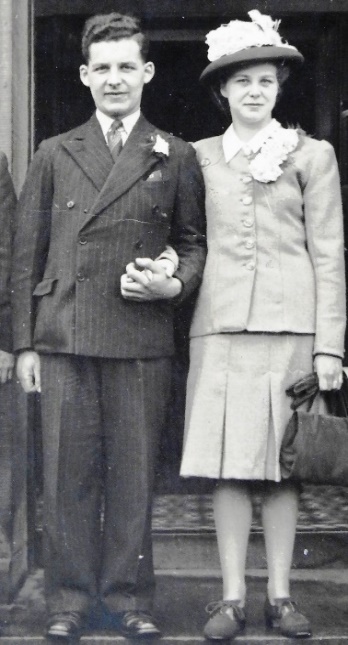
Angela married Major Peter Kellie in
April 1965, and by pure coincidence he had also received the same
education as Angela’s father, firstly at Charterhouse and then Trinity
College Cambridge. He then enlisted and served with the 14th Army in
Burma during the Second World War, twice being wounded and awarded the
Military Medal for "Gallantry in the Field" after leading a bayonet
charge on a Japanese machine-gun post during the battle for Mandalay.
After the war, he studied Estate Management at the Royal Agricultural
College, from where he entered the Aberfeldy Estates Office in North
Perthshire to complete his practical training. Increasing trouble with
his old war wounds forced him into early semi-retirement, but he was a
keen Territorial and Army Volunteer Reserve officer, serving with the
Army Cadet Force in first the Black Watch and then the Queen's Own
Highlanders. But he was politically motivated too and was a founder
member of the Dingwall Branch of the Scottish National Party. He was a
staunch upholder of all things Scottish; a Gaelic speaker, a keen piper,
an enthusiastic member of the Clan Donald Society of Edinburgh as well
as the 1745 Association, on whose behalf he used to lay the wreath at
the Memorial Cairn on Culloden Muir annually on 16th April, the
anniversary of the battle. It was he who made the arrangements for the
erection of the Memorial at Culloden to commemorate the Irish Piquets
who died so bravely. Peter was also a descendant of Flora MacDonald, the
Clan heroine and was Bannerman of Clan Ranald. However, on the evening
of 28 September 1976 he tragically drowned in a swimming accident at
Winchelsea in East Sussex, which came as a great shock to all who knew
him, but none more so than Angela and their two children.
Angela’s elder brother James Malcolm Palmer Douglas, the 23rd and final
Laird, volunteered for the RAF in Edinburgh as a radio mechanic aged 18,
having failed a medical for air crew. Initially trained at Blackpool, he
was first stationed at Dundonald near Troon but took every leave
opportunity to return to Cavers to spend as much time as possible with
Dorothy Margaret Campbell who would journey down from East Calder for
their trysts. Upon conclusion of World War 2 they married in Mid-Calder
and were soon celebrating the birth of their daughter Helen, followed
two years later by Nigel, who was born the day after his Great
Grandmother passed. James struggled to meet the financial burden of the
estate duties due upon the death of his grand-mother, and shortly after
the birth of Helen had relocated the family elsewhere on the Cavers
Estate, initially at Midgard, then during the sixties at Townhead, and
latterly at Hillhead. Thus, Helen owns the unwanted honour of being the
very last of a 500-year-old dynasty to have been born whilst still
living at Cavers.
Shortly after decanting to nearby idgard,
James had tried to sell Cavers House, but the Land Tax rates were so
high that potential buyers were put off. Mary’s estate duty bill had
eventually been assessed at £17,000 (the modern equivalent would be
£1.3M), so the house was emptied with high-end valuables like antique
furniture, paintings, and even carpets being auctioned at Christies in
London. 75 years previously, on the occasion of her very last walk
around the estate with her uncle James (20th), Mary Douglas Malcolm
Douglas had filled a notebook with everything she had been shown and
included in her inventory were collections of both Diaper & Damask
tablecloths & napkins, tea-sets, Emma Carnegie’s mandolin, a Russian
helmet from the Crimea and even a piece of Atlantic cable containing the
electric wire in the centre. 70 paintings were listed [Dining Room (14),
Drawing Room (15), Library (7), Living Room aka Green Room (24), Landing
(2), Divinity Room (8)] with the most noteworthy being:
• a portrait
of St. Peter by Peter Paul Rubens (many different ones exist)
•
portrait by James Saxon of Lady Grace and her son Frank wearing gypsy
costumes, another of James (19th) disguised as a haymaker, and one of
Lady Anne Stewart and two of her nephews who were Earls of Moray
•
two later copies of paintings by Antonia da Correggio: The Mystic
Marriage of St. Catherine by Annibale Carracci & Madonna with Saint
Jerome by Giuseppe Mazzolini
• a large landscape picture of Castle
Gloom and another called Ruins of Lindisfarne, both by John ‘Old Jock’
Wilson
• The Earl of Moray (Lady Grace’s father) by Sir Thomas
Lawrence
• Sheep & Goats by Rosa da Tivoli
The money raised
from everything that was sold duly cleared the ‘death duty’ (as Estate
Duty was crudely referred to at the time), but there was still Land Tax
to be accounted for. Historically the number of windows in a property
were a factor in determining how much was due, but Window Tax had been
abolished just over a hundred years earlier primarily due to public
health concerns as bricking up windows to avoid the tax had led to
outbreaks of typhus, smallpox, and cholera. Instead, it was Land Tax,
also known as Rates, which was calculated based on the annual rateable
value of a property. Therefore, to stay off the wolves and avoid
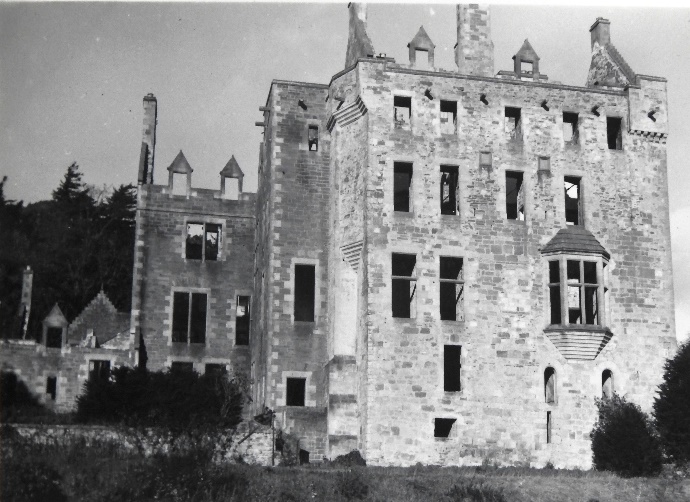
plunging the family into ruin, in 1953 James offered the British Army
the once in a lifetime opportunity to use the former stately home as
target practice, but even their best efforts couldn’t reduce portions of
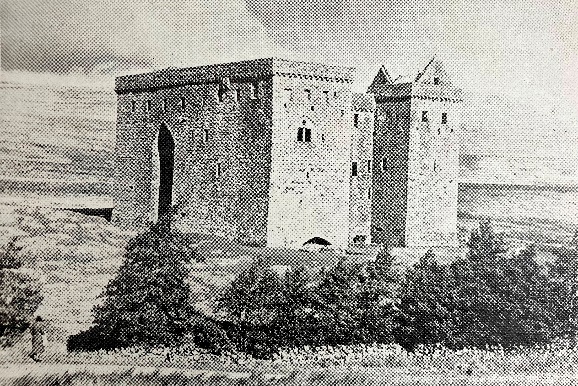
it to rubble, so thick were the outside walls, and The Warden’s Tower
remains to this day.
Nonetheless, more than enough damage had
been done to avoid the Land Tax, but working capital was still needed to
retain six Foresters, two Gamekeepers and an Overseer. The farms of
Birneyknowe and Earlside were sold, followed by Home Farm at Mains of
Cavers in 1955, in the hope that the remaining 4,000+ acres would
continue as a going concern. Midgard House sold in late 1952 for £2,500
(below market value due to the layout of the house being too difficult
to divide its 13 rooms into smaller residences, as well as having
gardens that were difficult to maintain), so the family were now living
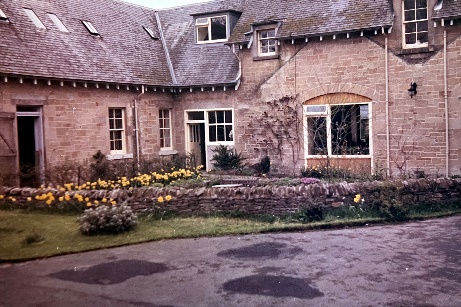
in ‘The Stables’ at Townhead of Cavers (a Stabling Block built by James’
grandmother in 1886) which James had now converted into a six-roomed
home. James and first wife Dorothy divorced in 1959, with James quickly
marrying another Dorothy, but this time his housekeeper Dorothy
Blakelock (2) from Northumberland in August of that year. The couple spent
eight years continuing James’ love of breeding golden retrievers at “The
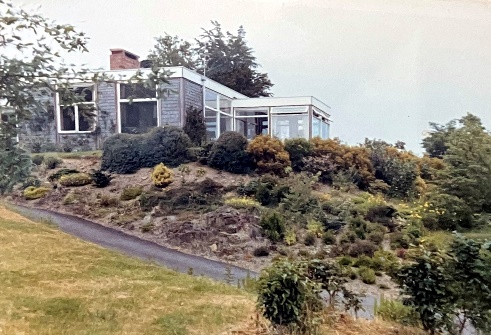
Stables” before moving into a new bungalow within the Pillar Park (later
to be called “Hillhead of Cavers”) which overlooked the pillar, less
than a mile due west of the ruins of Cavers House.
However, only
those close to the couple were aware that their first child James Ninian
Douglas had been born just two months prior to their wedding and had
been quickly put up for adoption under a different name to avoid the scandal it might then have
caused within landed gentry circles. A daughter Frances followed only a
year later, and lastly Stephen James in 1962. Like his grandfather
Archibald, whom he never met, Stephen was a very keen gardener and
landscaper and would undertake a lot of work in Hawick under the guise
of Cavers Horticultural Services.
By the late 60’s the estate was
running at a loss, so remaining lands were subsequently sold on a
farm-by-farm basis to sitting tenants (the law preventing otherwise), as
and when family finances dictated. James and Dorothy divorced in 1975,
and the final parcels of workable land were disposed of at that time to
fund the settlement. James married Lilian ‘Lynne’ Isabel Mary Martin in
Macclesfield in January 1978, with the grounds of Cavers House upon
which the ruins sit becoming his final sale two years later. To support
them James worked as an Independent Financial Adviser in Glasgow (only a
few yards away from the building where the son he never met was
employed) and Edinburgh from 1982 to 1996, before relocating to Muir of
Ord to be closer to his sister Angela where he became a devout
born-again Christian as his letters from that period indicate.
After a long period of illness, Lynne died in Inverness in 1993. Five
years later James married his fourth and final wife, Anne Mearis
Robinson (née Higham) in Helmsdale on 14 October 1998. However, they
separated in 2004, followed by an amicable divorce (unlike those from
his first two marriages) in July 2006. James died in Greenlaw,
Berwickshire in 2013, the year after the passing of both his younger
siblings.
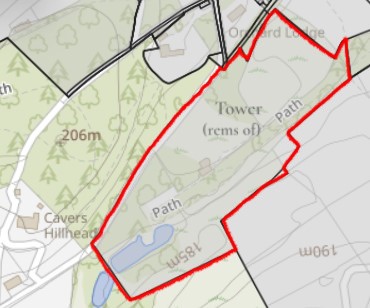
During the last 50 years various plans have been put
forward to rebuild Cavers House as a viable commercial enterprise. The
present owner is an American lady who purchased the ruins and the
surrounding land in September 2019; latterly receiving a lot of
publicity for her grandiose plans to fully restore the property to its
former glory. By 2021 she disclosed that she intended to turn the
Category B listed building into a luxury hotel, but on the back of local
and environmental objections she failed to achieve the necessary
planning permission from Scottish Borders Council. Revised plans [pdf] to turn
it into ‘Cavers Castle Tower House’ were submitted two years later, and
approved in October 2023
The proposal involved significant works to retain and extend the
ruin including the refurbishment of the tower and Georgian building
remains, the addition of extensions to the north and south (one more
traditional and the other hybrid/ contemporary) and the reinstatement of
associated landscaping including the reconstruction of walled gardens.
Traditional materials were to be used to restore and repair the existing
stonework, harling, slate roofs and timber fenestration details, but
crucially there were 26 different conditions to be satisfied before work
could commence. Under Scots law, development must be started within five
years for the permission to remain valid, so three years remain for this
to happen, but the longer that the site continues to remain devoid of
activity the more that speculation will increase that it’s become a
vanity project without sufficient funds to complete it. In the interim
it technically remains a work in progress.
From a purely Douglas
perspective though there is one final twist in the tale. When James
(23rd) had sold the parcels of land comprising the remainder of the
estate, written into those agreements was the exception of one small
portion to the rear of the Auld Kirk at Townhead of Cavers. Generations
of the family had been entombed in one of two vaults beneath the Auld
Kirk, but in 1878 that practice changed when an adjacent external burial
plot was created. First to be interred there (at a pre-determined spot
of his own choosing) was James (20th), with his name being commemorated
by on a large marble obelisk (which supplemented a small temporary
gravestone) that had been commissioned by grateful tenants. It’s clear
though that James’ remote wife Mary who died at Kreuznach (20 miles
southwest of Mainz) in Germany in July 1885 was equally well thought of,
as in a letter dated 25 January 1887 Walter Haddon the factor for Cavers
successfully applied on behalf of the Cavers Tenantry to belatedly add
an inscription below that of her husband; metaphorically the first time
the two had lain together. Seemingly approval wasn’t unanimous though as
in the same letter ‘J. Turnbull of Spittal on Roul' was mentioned as
being less enamoured by the proposal than his neighbours.
Archibald (22nd) was next to be interred in 1947, followed by his wife
Maria’s ashes twenty years later; both their details being commemorated
on a white marble headstone.
The reason behind James (23rd)
determination in 1975 to retain access to the burial plot became clear
in 2013 when he was laid to rest in his own plot alongside his
ancestors, and although his son Stephen’s ashes were scattered elsewhere
in the area, as it was a double plot Stephen’s name was added to his
father’s gravestone, following his premature demise on 18 August 2024.
In Stephen’s memory, two of his siblings spent Easter 2025 restoring
the entire burial plot, firstly to make it easier to maintain in future,
but also to encourage increased numbers of visitors, some from as far
afield as North America, including Douglas Clan members who make a
pilgrimage to this historical Douglas site. Although located behind the
Auld Kirk, access to the site is initially through the main gate of
Arbourlaw Cottage, then a second gate 50 yards further on, followed by a
200-yard grassy incline before reaching a short, curved woodland path on
the left which leads to the entrance. Whilst visitors are very welcome,
they are asked to be particularly respectful of the cottage owners’
property by closing gates behind them as they go, while noting that the
occupants of the cottage are unable to accept any responsibility or
liability for anyone walking through their private garden or woodland
area. Minor roads in the vicinity of Townhead of Cavers are single
track, therefore visitors should bear in mind that finding a suitable
place to park could be as far back as Midgard Lodge, over half-a- mile
away.
(Thanks to Helen Lorenz Palmer Douglas and James Ninian
Douglas for their help in updating this page in September 2025)
Notes:
1. Picture of the fireplace lintel panels in
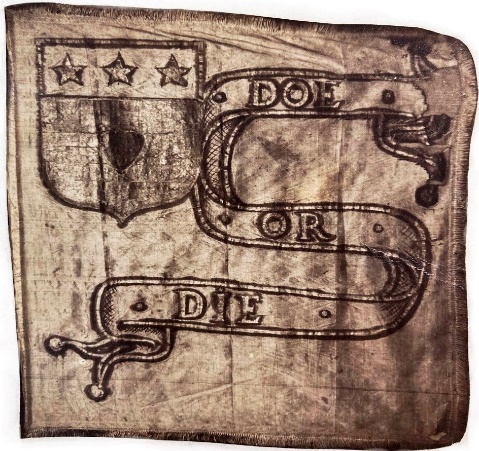
Westgate Hall, Denholm (Cat. A listed building). Left panel, which is octagonal, contains the initials S A D for Sir Archibald Douglas and below them the charges of his shield- a heart, three mullets in chief. The right panel is oblong; at the top are the initials D R S for Dame Rachael Skene and below them a 'skean' or dagger between three wolves' heads couped.
2. Dorothy applied for the post of 'Housekeeper'
but apparently was not actually employed as such following the job
interview as the couple were 'attracted to one another'.
Further reading:
The Cavers
collection contains a wide range of additional research material.
Contributions
Do you have an ancestor whose
story should be told here? Can you add to this article? Please let us have the details.
|