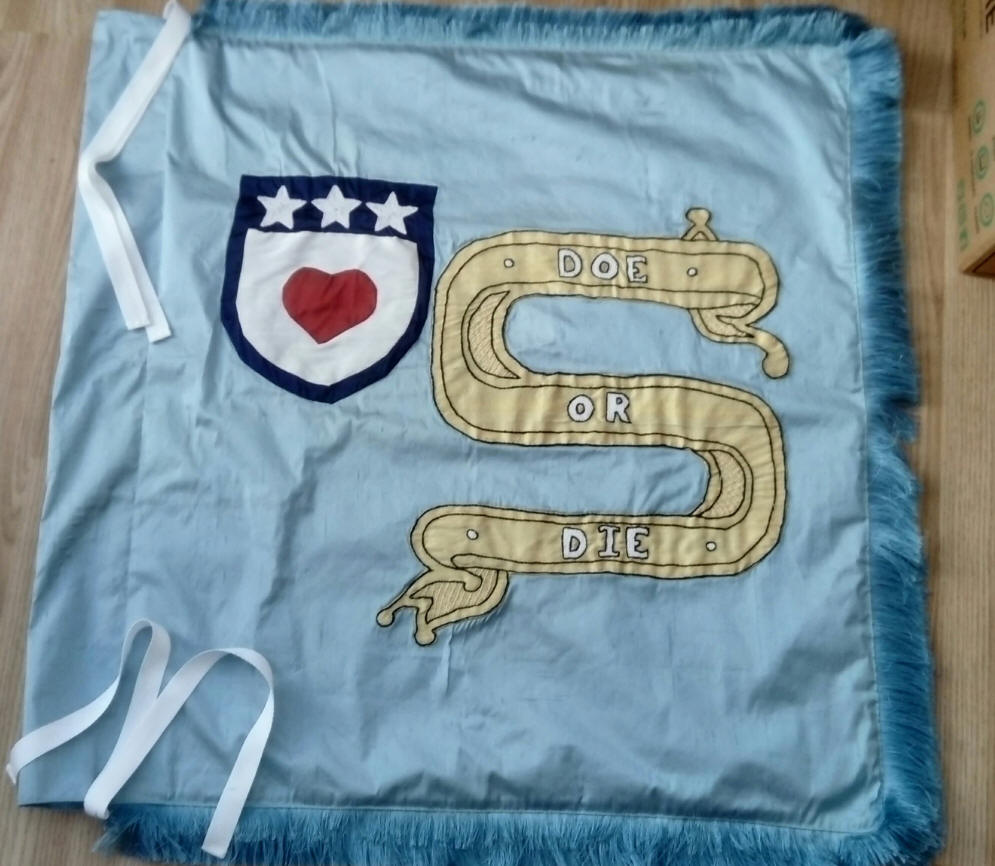
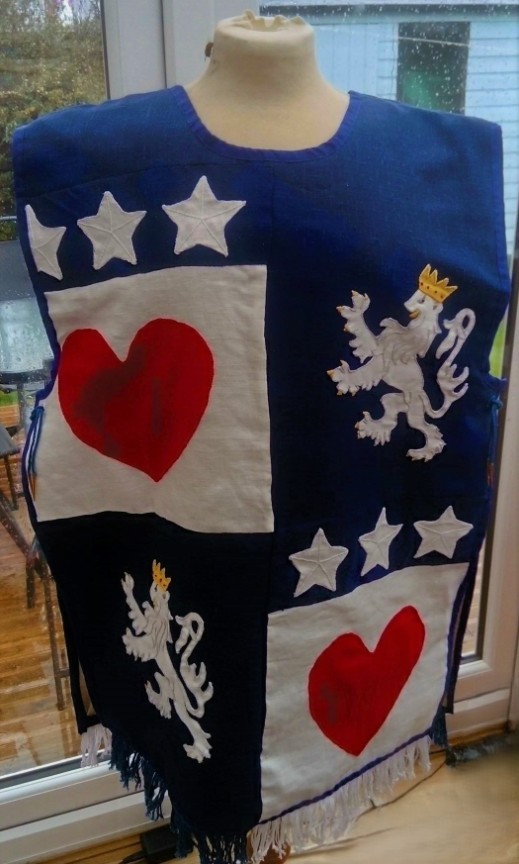
This article forms part of the Douglas of
Cavers collection
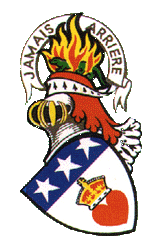
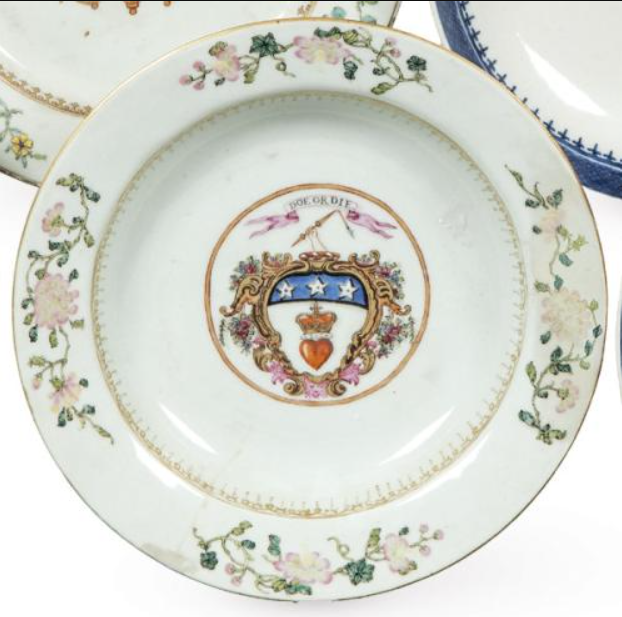
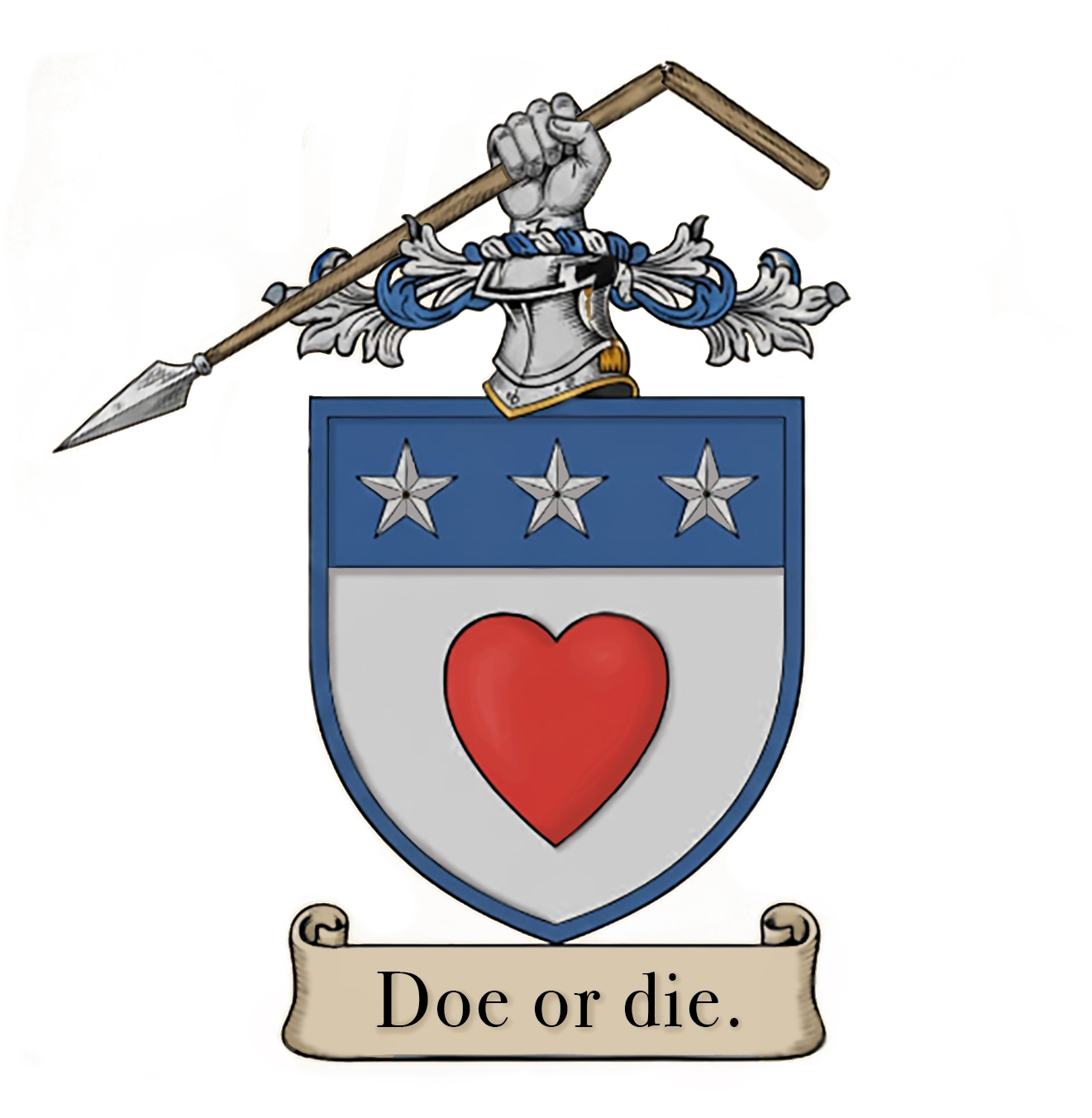
The heraldry of the Douglas of Cavers family, a distinguished cadet branch of Clan Douglas, is a fascinating example of Scottish differencing, with variations recorded over centuries. Their arms are rooted in the main Douglas achievement but distinctively marked to show their lineage and position.
Heraldic Achievement of Douglas of Cavers
The family descends from a natural son of the 2nd Earl of Douglas and Mar, and their heraldry evolved through history, settling on a recognized coat of arms in the late 17th century.
* Arms (Shield): The core elements of the shield are those of the principal Douglas line:
Argent (silver/white), a man's heart proper (red, or natural color) with
on a chief Azure (blue band across the top) three mullets (stars) of the
first (silver). To distinguish the Cavers line, they added a
bordure of the third (a blue border). The heart is sometimes shown
imperially crowned in later representations, emphasizing the lineage's importance.
* Older seals show simplicity, such as the 1466 seal which quartered the Douglas arms (heart and stars) with a bend between six cross crosslets fitchy
(from the arms of a family like Laing or a similar alliance)
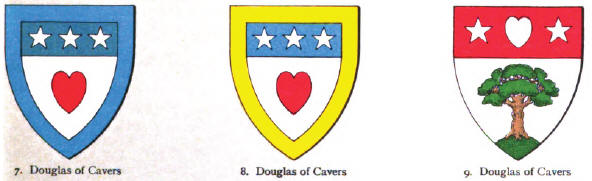
* Variations appear in historical records: The border is sometimes shown as
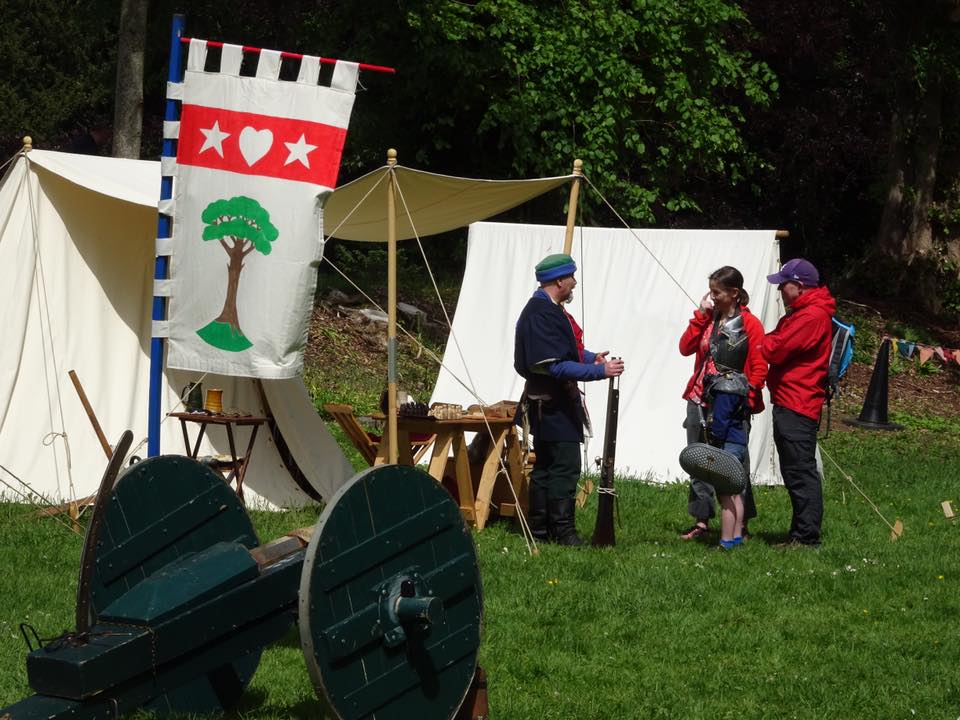
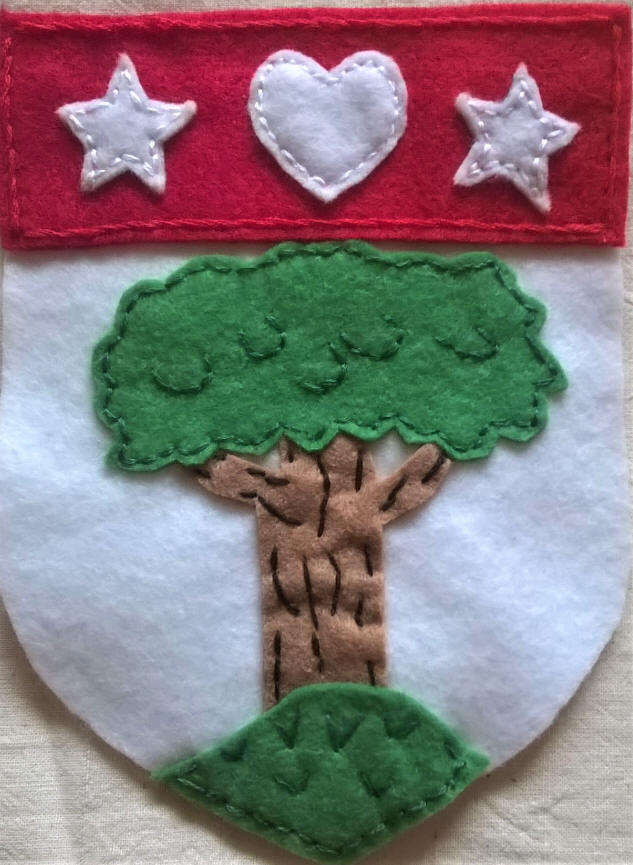
Gules (red) or Or (gold), and in a rare case (Porteous/Sibbald MS), the arms are completely different: Argent, a tree growing out of a mount in base proper, on a chief gules or azure a
heart between two stars argent.
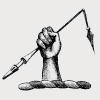
* Crest: The family uses a distinctive crest: A dexter hand holding aloft a
broken spear(1).
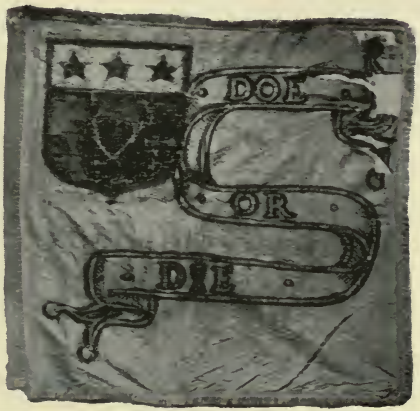
* Motto: Their definitive motto is "Do or die" (sometimes written as "Do, or die, like a Douglas").
Heraldry of Cadet Branches
A notable cadet branch, the Douglases of Friarshaw, further differenced the Cavers arms to establish their unique identity:
* Friarshaw Arms: They retained the Arms of Douglas and the blue bordure
of Cavers, but made the bordure nebuly (shaped with a wavy, cloud-like pattern) as their mark of difference.
Historical Documentation
The recorded arms in the Lyon Office (Scotland's heraldic authority) between 1672–1677 confirm the established arms for Douglas of Cavers:
Argent, a man's heart proper, on a chief azure three mullets of the
first, a bordure of the third (blue).
The use of the heart and stars reflects the Cavers line's direct, though illegitimate, descent from the great
"Black Douglas" (Sir James Douglas), who carried Robert the Bruce's heart. Their centuries-long tenure as hereditary sheriffs of Teviotdale cemented their status in the Scottish Borders.
Covenanter heraldry
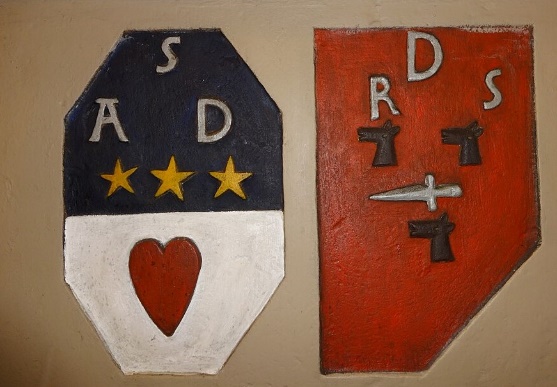
Lintel panels
above the fireplace in
Westgate Hall, Denholm (Cat. A listed building). Left panel, which is octagonal, contains the initials S A D for Sir Archibald Douglas and below them the charges of his shield- a heart, three mullets in chief. The right panel is oblong; at the top are the initials D R S for Dame Rachael Skene and below them a 'skean' or dagger between three wolves' heads couped.
Read more about the Douglases and the Covenanters
here>>>
Cavers heraldry in use
Related families
A bookplate possibly belonging to Robert Douglas Esq., 1728 - 1783, the Planter and later of Bishop’s Hull, Taunton Deane, Taunton, Somerset,
or to General Robert Douglas of Garlston N.B.
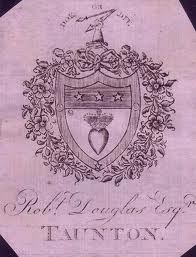
Note:
1 Sometimes described as an arm holding a broken tilting lance.
See also:
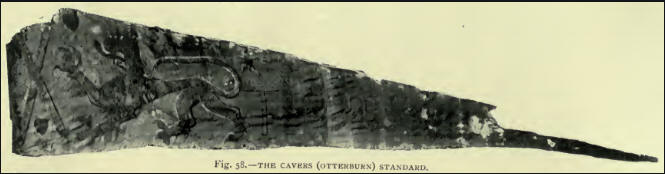
Douglas of Cavers Banners
for details of those shown above.
Douglas of Cavers
crockery
Douglas seal |