This page is a stub.
You can help improve it.
Stair Douglas was the third of the four sons of
Sir John Douglas of Kelhead and his wife Christian Cunningham, daughter of Sir William Cunningham, he was uncle to
Rear-Admiral Stair Douglas.
Douglas entered the Navy at an early age, serving in the Leeward Islands aboard Fowey (20
guns) under Captain George Mackenzie. He was commissioned lieutenant on 13 December 1756, later serving in that rank aboard Brilliant (36), Captain Hyde Parker, and Royal George (100), Captain John Campbell, flagship of Admiral Sir Edward Hawke in the Channel.
Promoted commander on 7 July 1761, he was ordered to commission the
French prize Sardoine (14), which he took to the West Indies that
December. He commanded Barbadoes (10) during the Martinique expedition
of January–February 1762, and subsequently served with Captain the Hon.
Augustus John Hervey’s force against St Lucia. From March to July he
commanded the bomb vessel Granado (8), having exchanged with Commander James Hawker, and thereafter the Port Royal (14) at the reduction of Havana. Posted captain on 29 June 1762, he briefly commanded Glasgow (20) before removing to Richmond (32), which he took to North America and retained there until the close of the war.
In the winter of 1770 he sailed Seaford (20) to Jamaica, where he exchanged with Captain Walter Stirling into Dunkirk (60), becoming flag-captain to Commodore George Mackenzie at Port Royal. Dunkirk returned to England late in 1771 and was paid off in March 1772. Douglas recommissioned Squirrel (20) in November 1773 and took her to Jamaica early the following year, returning home in 1777.
After a short period ashore he recommissioned Montreal (32) in late 1777, serving on the North American station and escorting the Portuguese and Mediterranean convoys from Spithead on 12 October 1778 in company with Hussar (28), Captain Elliot Salter. Remaining thereafter in the Mediterranean, he was cruising with Thetis (32), Captain John Gell, on 1 May 1779 when Montreal fell in with the French ships Bourgogne
and Victoire (both 74) in the Straits of Gibraltar. Thetis escaped, but Montreal was forced to strike after brief resistance. The French continued firing for some time after her colours had been hauled down and, upon boarding, plundered the officers’ stores. Douglas and his crew were taken to Alicante and subsequently released.
Exchanged in 1780, he was appointed to commission the new Prince William (64) for service in the Channel fleet, later sailing to the Leeward Islands with Rear-Admiral Sir Samuel Hood’s reinforcements. He was present at the capture of St Eustatius on 3 February 1781, but drew the censure of Admiral Sir George Rodney for firing upon the Dutch frigate Mars (38) after its capitulation. Severe sickness later swept Prince William, forcing her crew ashore at St Lucia to assist in the demolition of a church for the construction of a dockside hospital. Returning to sea, the ship fought at the Battle of Fort Royal on 29 April, suffering six wounded.
Soon afterwards Douglas transferred, apparently for reasons of health - though Rodney’s reprimand may have played a part
- to Triumph (74) for his passage home. Escorting a convoy with Panther (60), Captain John Harvey, he prudently took his charges into Cork rather than risk the French fleet reported off the southern English coast. Triumph was paid off in November 1781.
Appointed to Grafton (74) in the autumn of 1782, he resigned the command within days, again citing ill health and perhaps influenced by her intended service in the East Indies. He briefly commanded Cambridge (80) in early 1783 before she too was paid off in May.
Douglas received no further employment and died unmarried at Richmond, Yorkshire, on 8 April 1789.
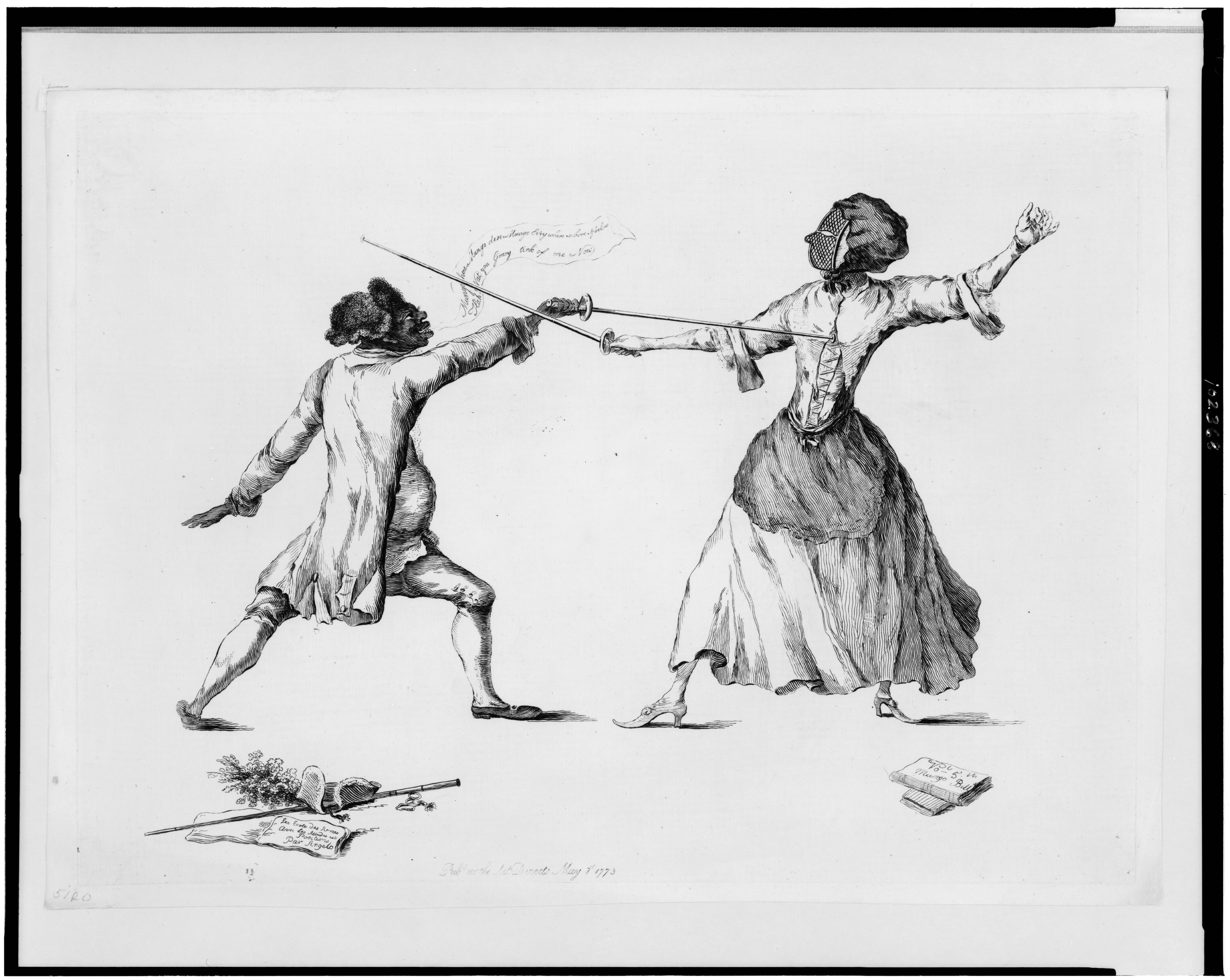
Contemporaries regarded him as mildly eccentric but generally well liked. In 1764 he presented a ten‑year‑old enslaved boy
given the name Othello from St Kitts to the Duchess of Queensberry. The boy, Julius Soubise, later became a noted figure in London society, remembered for his elegance, wit, and reputation as something of a fop.
Notes:
• Catherine Hyde, often called
"Kitty", was the second daughter of Henry Hyde, 4th Earl of Clarendon, and his wife, the former Jane Leveson-Gower.
She served as a Lady of the Bedchamber at the court of Queen Anne.
Catherine married Charles Douglas, 3rd Duke of Queensberry, on 10 March 1720. The couple had two sons and lived much of the time at Douglas House, Petersham, now part of London and at Queensberry House in Edinburgh.
Contributions
Do you have an ancestor whose
story should be told here? Can you add to this article? Please let us have the details.
|