|
| |
MacDougall vs Douglas: Power, Loyalty, and the Making of Bruce’s Scotland
|
|
|
The Breaking of Argyll: MacDougall Defiance and the Rise of the Black Douglas
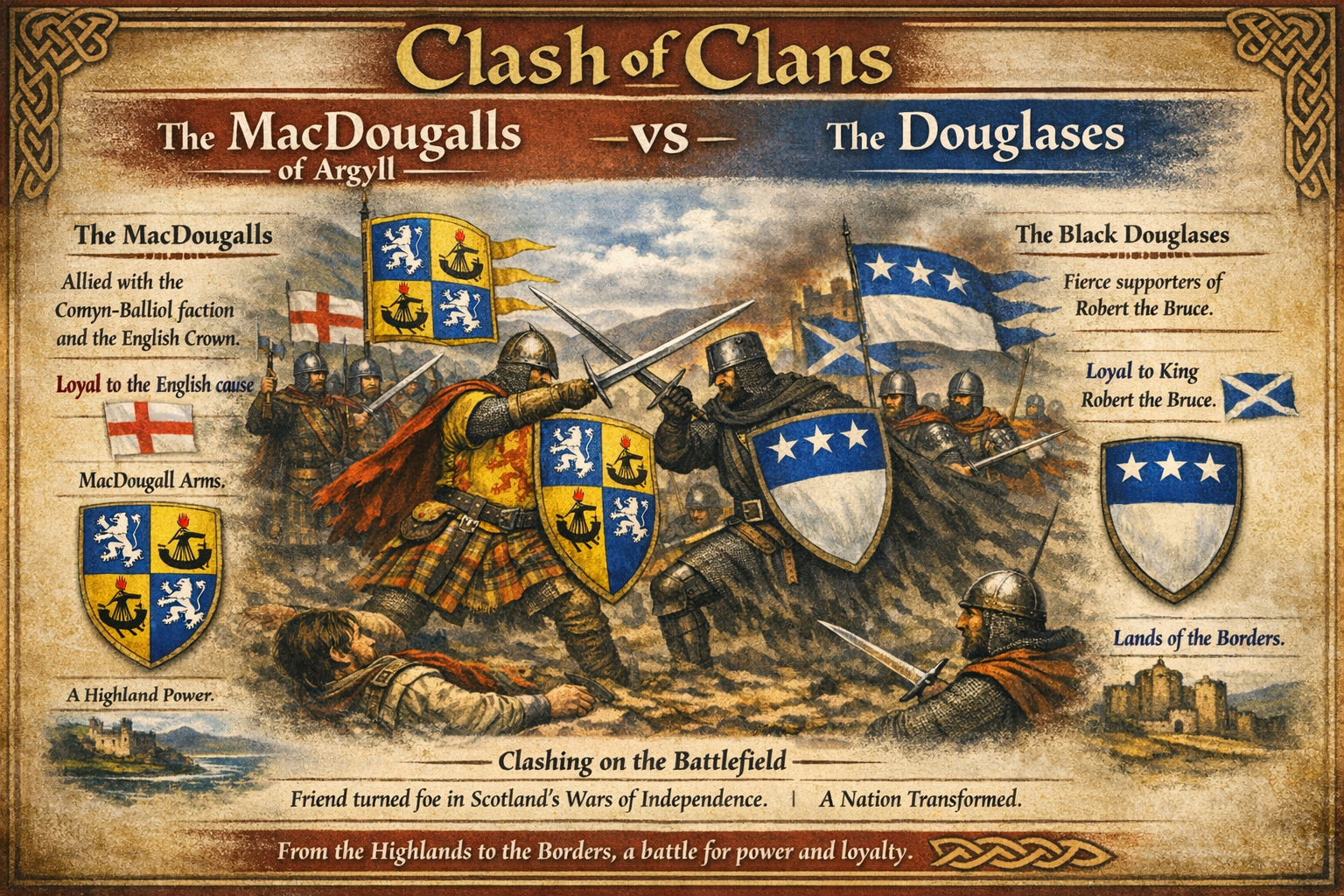
The clash between the MacDougalls of Argyll and the
Black Douglases in the 14th century sits right at the heart of
Scotland’s Wars of Independence: a collision of loyalties, geography,
and personal vendettas that shaped the political map of the west and the
Borders.
The MacDougalls backed the Comyn–Balliol faction and the
English Crown, while the Black Douglases were the fiercest allies of
Robert the Bruce. That alignment made confrontation almost inevitable.
- Clan MacDougall was a major Argyll power with strong ties to the
Comyns, Bruce’s greatest rivals. Their chiefs held Dunollie and
Dunstaffnage and were deeply embedded in the western seaboard power
structure.
- The Black Douglas line, led in this period by Sir James
Douglas, was Bruce’s most trusted lieutenant. To the Scots he was “Good
Sir James”; to the English, “the Black Douglas,” a name born of fear.
The Bruce–Comyn killing (1306) and its consequences
When
Robert the Bruce killed John Comyn in 1306, the MacDougalls—Comyn
allies—became immediate enemies of Bruce and, by extension, of the
Douglases who fought for him. This set the stage for a west-coast civil
war within the wider struggle for independence.
The Battle of
Dalrigh (1306)
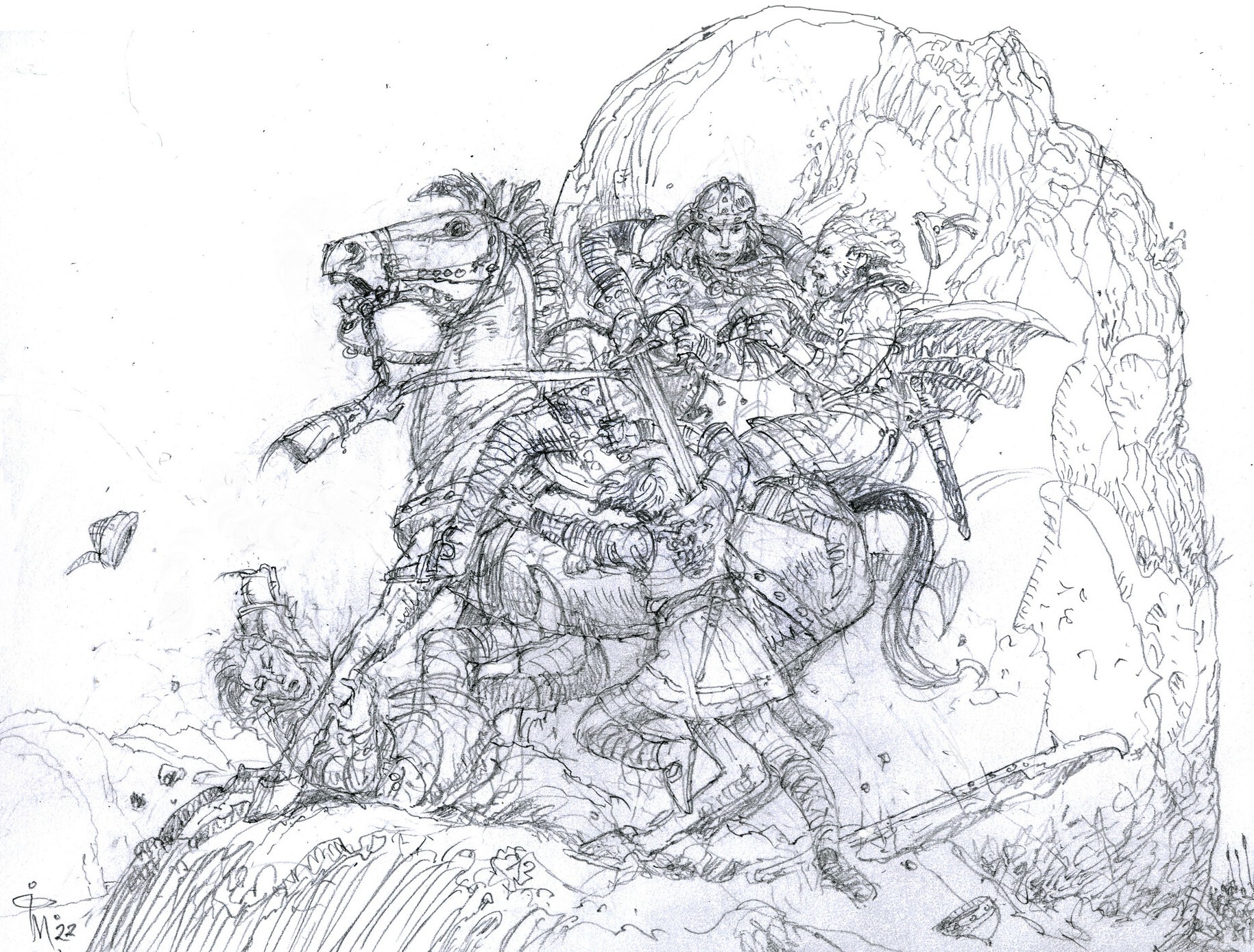
Shortly after Bruce’s coronation, the MacDougalls
ambushed him at Dalrigh near Tyndrum. Bruce’s forces were badly mauled,
and the MacDougalls captured the famous “Brooch of Lorn,” a symbol of
their victory and enduring enmity. Read more...
The Battle of the Pass of
Brander (1308)
Bruce returned to Argyll with a vengeance. At the
Pass of Brander, he crushed the MacDougalls and broke their regional
power. This defeat forced the clan into exile or submission and opened
the west to Bruce’s consolidation. Read
more...
The Douglases rise as Bruce’s
enforcers
While Bruce subdued Argyll, James Douglas became the
terror of English garrisons in the Borders. His guerrilla tactics, night
raids, and relentless pressure earned him the “Black Douglas” reputation
among the English.
This rise in Douglas prestige contrasted sharply
with the MacDougalls’ decline.
It was not a feud of equals:
the MacDougalls were a great Argyll house undone by their political
alignment; the Black Douglases were a rising Lowland power whose
fortunes were tied to Bruce’s success.
Their conflict symbolised
the fracturing of Scotland during the Wars of Independence—where clan
loyalties, marriage alliances, and regional rivalries could be as
decisive as English armies.
The MacDougall defeat helped secure
Bruce’s control of the western seaboard, while the Douglases became
indispensable to his military strategy and later one of the most
powerful families in Scotland.
By the mid‑14th century, the
MacDougalls had lost much of their former influence, while the Black
Douglases were approaching the height of their power—territories
stretching from the Borders to the north, wealth, castles, and a
reputation that made kings uneasy.
Contributions
Do you have an ancestor whose
story should be told here? Can you add to this article? Please let us have the details.
|
Source
Sources for this article include:
xxx
Any contributions will be
gratefully accepted
|
|