This article is based on
notes kindly provided by Sally Douglas.
The Scot and the Martyr: A Douglas Pilgrimage to Canterbury
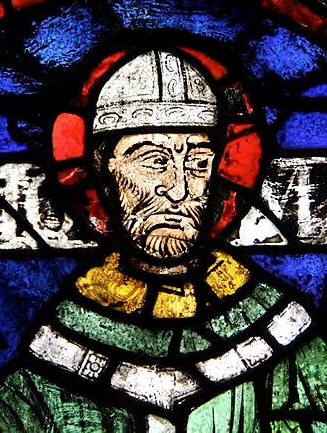
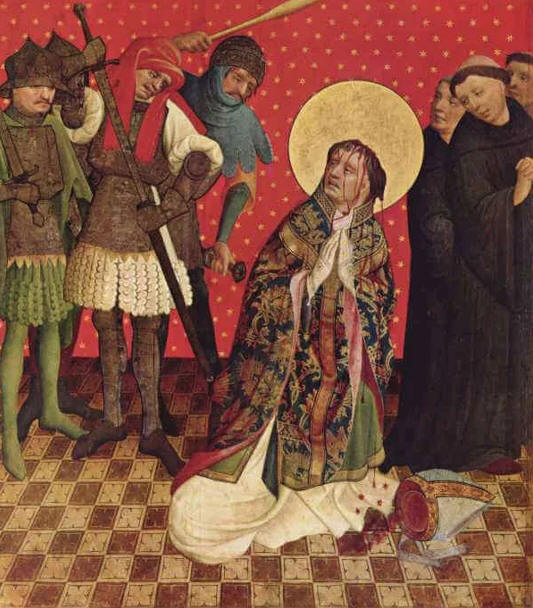
In the heart of Kent lay Canterbury Cathedral, a sacred magnet drawing souls from across Europe, its fame inextricably woven with the blood spilt on its stones in 1170. That year, the contentious Archbishop, Thomas Becket, met a brutal end. It was said that after a long, simmering dispute, a frustrated King Henry II had exclaimed, "Who will rid me of this low born priest?" Four knights took his words as command, riding to Canterbury to murder Thomas right there in the place now revered as the
Martyrdom.
The Allure of the Pilgrim's Path
The fourteenth and fifteenth centuries marked the zenith of the pilgrimage, a compelling fusion of spiritual yearning and adventurous escape. From the highest noble to the lowliest peasant, all classes journeyed to centres of holiness
- a revered saint's tomb or the site of a celestial vision. The hope was to receive some grace or blessing at the journey's end, a reward for conquering the physical hardships and dangers of the road. Yet, the journey was also a joyous escape from the tedium of daily life, filled with opportunities for camaraderie and adventure, just as Chaucer captured with his merry band of pilgrims travelling from London to venerate St. Thomas à Becket.
Becket's Hold on the Scottish Soul
Despite the physical and political distance, Becket's potency resonated profoundly in Scotland. Long before the great wave of 14th-century travel, the Scottish Crown, its leading nobles, and churchmen had shown a deep and enduring interest in the English martyr. This devotion wasn't solely expressed through pilgrimages to Canterbury; it was also solidified in the founding and support of a monastic house dedicated to Becket at Arbroath, Angus. This saint's appeal extended far beyond the elite, capturing the hearts of "lesser Scots" as well.
This interest, though momentarily eclipsed, experienced a revival after the turbulence of the
Scottish Wars of Independence (1296–1357). Following the release of King David II in October 1357, a "striking and regular traffic" began, marked by notable Scots seeking
safe conduct to journey through or to England, with Becket’s tomb frequently their ultimate goal. This traffic, however, was later curtailed by renewed border hostilities following the death of Edward III in 1377, and eventually, a burgeoning interest in homegrown Scottish saints led to a decline in Becket's pre-eminence.
Scholars still debate the Scots' motivation: was this devotion driven by piety, penance, politics, diplomacy, or personal gain?
For families like the Douglases, who had held lands in Essex at Stebbing and Woodham Ferrers after 1237, perhaps establishing ties and devotion to Canterbury felt a natural, almost familial, connection.
The Douglas Line and the Martyr's Shrine
The formidable Douglas family stands out among those Scottish nobles drawn south to the Kentish shrine in the 14th century:
* 1330: Sir James Douglas, Lord of
Douglas was speculated to have potentially passed through England and Canterbury on his way to the Continent
- a route that would bring him tantalisingly close to the celebrated tomb.
* 1362: William Douglas, 1st
Earl of Douglas and Thomas, Earl of Mar, are proposed to have been among a large group of Scots who sought passage to Canterbury in November. This journey may have formed part of the "funerary tributes" following the death of
Queen Joan in September of that year.
* 1363: William Douglas, 1st
Earl of Douglas made a direct and documented pilgrimage to the shrine of St. Thomas-a-Becket. Crucially, though such journeys were sometimes a cover for treasonable political intrigue with the English, Douglas remained a staunch patriot, steadfastly opposing any attempts to betray Scotland's cause to the enemy.
* 1358, 1373, and 1375: Eleanor Douglas, the much-widowed sister of William, showed a persistent devotion to the saint. She sought entry into England multiple times to "visit the shrines of the saints," specifically naming
Becket’s Tomb as her destination in 1373 and again in 1375.
* 1373: Sir James Douglas, first Lord of Dalkeith, undertook a pilgrimage to Canterbury, for the accomplishment of which a safe conduct was given him.
* 1374: Sir Henry Douglas of Lugton &
Lochleven also secured a safe-conduct on May 16, 1374, explicitly for a
visit to Canterbury. Henry is the ancestor of the Douglasses of
Lochleven and of the present Earl of Morton, further illustrating the
family's deep, sustained interest in the English martyr.
*
James Douglas of Strathbrock also petitioned for safe-conducts to Canterbury.
Whether this was granted, and when and if he travelled is not known (to
me)
Thus, the powerful Douglas lineage - from the warrior Sir James to the politically astute Earl William and his devout sister Eleanor
- formed a significant part of the Scottish thread woven into the fabric of Becket's enduring legacy at Canterbury.
Contributions
Do you have an ancestor whose
story should be told here? Can you add to this article? Please let us have the details.
|