   |
|
|
|
|
| ||||||
|
Loddington Hall
There are two places named Loddington Hall. Here, we review Loddington Hall in Leicestershire. The Loddington Hall in Northamptonshire does not have a Douglas connection.
 Loddington is a small village and civil parish north of Market
Harborough and east of Leicester in the county of Leicestershire. It
has a population of 77. Loddington is a small village and civil parish north of Market
Harborough and east of Leicester in the county of Leicestershire. It
has a population of 77.In 1125, the village was granted to Launde Priory by Richard Basset and his wife, as part of the original endowment of the priory. The Game and Wildlife Conservation Trust is based at Loddington House, where it has run the Allerton Project since 1992 to demonstrate the integration of game and wildlife conservation with profitable farming.
We know from the Doomsday Book that at least a part of the Loddington Estate was being farmed in the 11th century, although it is likely to have had a larger area of pasture than now. Before the plague, the population of the village was probably higher than at present and, with very much lower-yielding crops, a large area would be required to provide for the community. Loddington was enclosed between 1607 and 1640, changing the landscape and forcing many to seek work elsewhere.
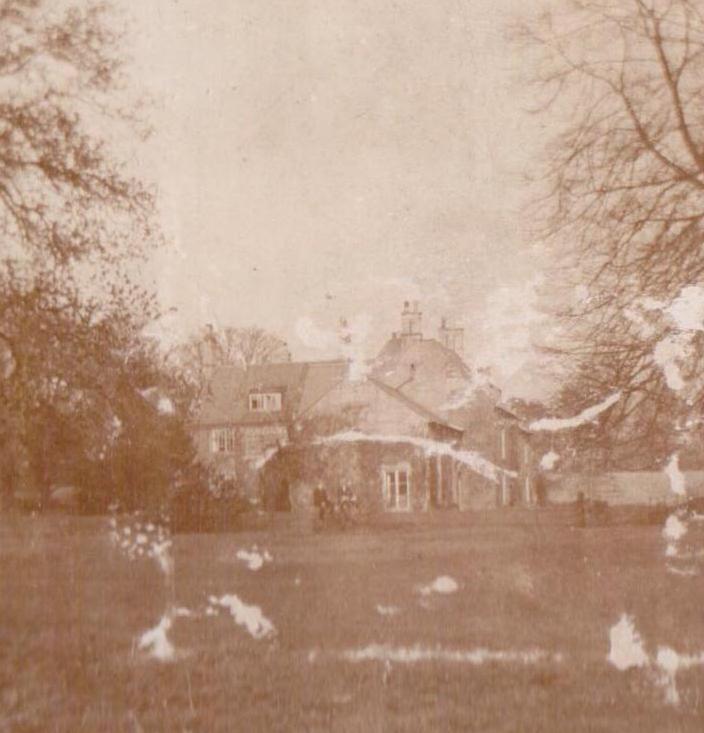
Lord Aberdour purchased Loddington Hall in 1877. It had been advertised for sale in May 1877. Lord Aderdour was offering the Hill House Estate, Cold Newton, Leicestershire for sale in June 1877 because he had bought Loddington Hall. A large north wing was added to Loddington in 1893.
Lord Aberdour's(1) interest was mainly in hunting. This was the main area for fox hunting in England and many estates were bought by aristocrats for shooting and hunting. The railways enabled others to travel from London for such pursuits. At this time the population of Loddington was higher than before or since with grooms, coachmen and gardeners as well as a blacksmith, a miller and farmers.
The family were running a Loddington Hall polo team before the 1st World war. In 1905 the team was Hon R Douglas, Lord Aberdour, Hon C Douglas & JF Flemimg. After the First World War the decline in farming continued as
elsewhere. However one consolation for farmers were the shooting
opportunities as grey partridge numbers thrived on almost abandoned
farmland. Notes: 1. Some reports say that the estate was acquired by the Douglas family in the mid-20th century. However, photographic evidence shows them there in 1905. In 1880, Lord Aberdour was Sholto George Douglas, later the 19th Earl of Morton. In 1905, Lord Aberdour gave Loddington Hall as an address on a membership application for the Roehampton Club.
See also:
Any contributions will be gratefully accepted
| ||||||||||||||||||||||||||||||||
|
The content of this website is a collection of materials gathered from a variety of sources, some of it unedited. The webmaster does not intend to claim authorship, but gives credit to the originators for their work. As work progresses, some of the content may be re-written and presented in a unique format, to which we would then be able to claim ownership. Discussion and contributions from those more knowledgeable is welcome. Last modified: Sunday, 08 March 2026 |