|
| |
Donguila (also Dongila or Douglas), Gabon
|
|
|
Donguila, a village in the Estuaire Province of Gabon, is also known as
Douglas primarily due to the phonetic evolution and "Frenchification" of the local name during the colonial era.
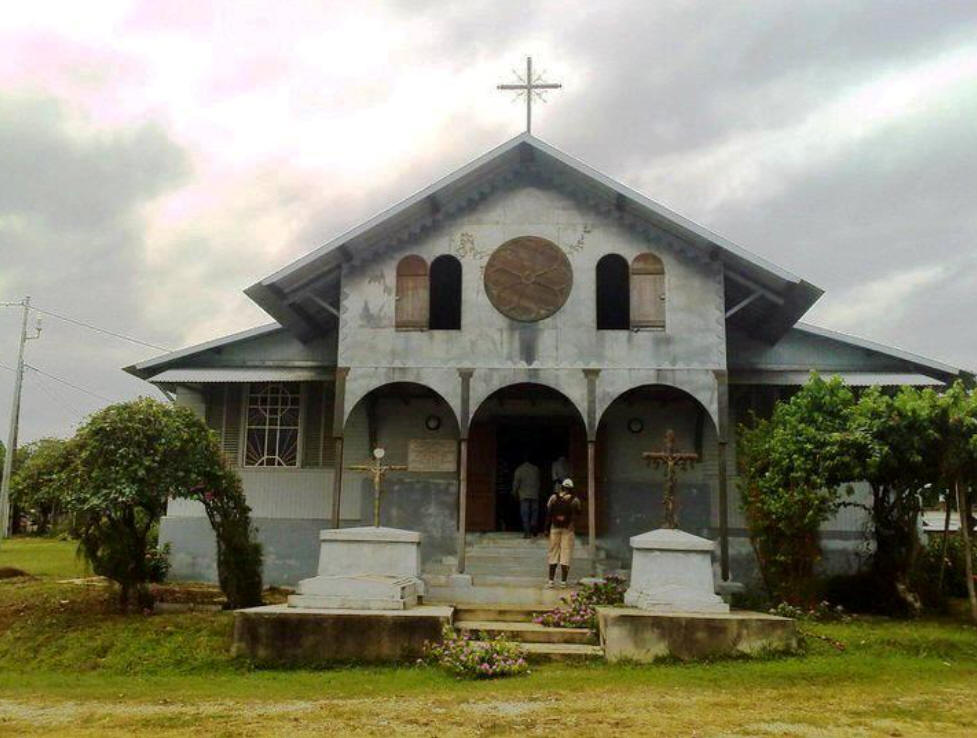
The name "Donguila" originates from the local Fang language (specifically the Mekeh variant). When French explorers and missionaries settled in the area in the 19th century—most notably with the founding of the **Saint Paul de Donguila** Catholic mission in 1878—the name was frequently transcribed or mispronounced by Europeans.
Why the name 'Douglas'?
The transition to "Douglas" is attributed to two main factors:
* Phonetic Approximation: To French and English speakers of the 19th century, the nasal "ng"
and the vowel structure of Donguila sounded remarkably similar to the common Western name Douglas.
* Colonial Mapping: On several early colonial maps and within administrative records of French Equatorial Africa, the village was often recorded as "Douglas" or "Donguila (Douglas)" to make it more recognizable to European administrators and sailors navigating the Komo River.
Historical Significance of the Area
While the name Douglas is less commonly used today in favor of the original "Donguila," the location remains historically significant for a few reasons:
1. The Saint Paul Mission: It is home to one of the oldest Catholic missions in Gabon. The mission served as a pivotal educational and religious hub during the late 1800s and early 1900s.
2. Scientific Discovery: For biology enthusiasts, Donguila is the "type
locality" for Peters's Hybomys (Hybomys univittatus), a species of rodent first documented there for Western science.
3. Geography: It sits at a strategic point overlooking the Komo River, across from Pointe Denis, which made it a natural landmark for travelers heading toward Libreville.
Overview
Donguila is a small town in Gabon , located in the Komo-Mondah department in the Estuary province. The city of Donguila is located on the right bank of the Komo river between the city of Libreville and that of Kango. It also has access to the N1 road, then by taking the L106 to Ntoum. Donguila has located about 70 km from Libreville, on the right bank of the Komo between the Rogolié and Assango rivers.
The town of Donguila, located 30 km from Ntoum , is made up of many villages, the most important of which are Nyantsobe, Mbol Ezok, Saint Henri Le Four à Chaud (Aufourachaud), Mekome, Edzoung Alenga, Donguila center made up of the mission and the coastal part of the village, Foula, Abian Mifak, Bon Coin, PK25, PK24, Elong Eko, and Nzamalighe.
Upon their arrival in the Donguila sector, the Akélé, the first occupants of the sector, probably coming from the left bank, settled on the edge of the Komo. None before them had lived in this area. There, they founded their first village, the original name of which becomes hypothetical. Indeed, on the origin and meaning of the toponym "Donguila", several hypotheses are advanced.
The first sees it as Akélé because the ethnic group was the first to inhabit this area. The term would come from the deformation of "Bidonla", the name of a local chief.
Education was part of the social work of missionaries. In Donguila, there were two schools: one for boys and one for girls. In addition, there was a vocational school for "apprentices". The young boys received mainly moral and religious instruction; secondarily they learned to read and write French. The young girls received an introduction to housework, sewing and embroidery. This work was completed by the opening, in 1909, of a novitiate for the formation of future nuns. The workshop section, run by Father Henri Guillet, was reserved for older boys.
Contributions
Do you have an ancestor whose
story should be told here? Can you add to this article? Please let us have the details.
|
Source
Sources for this article include:
Exploring Tourism, Gabon
Any contributions will be
gratefully accepted
|
|