This page is a stub.
You can help improve it.
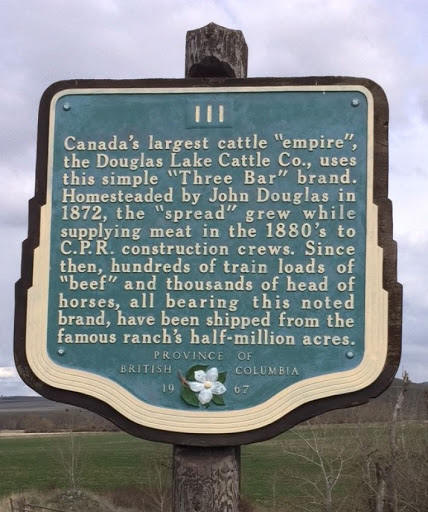
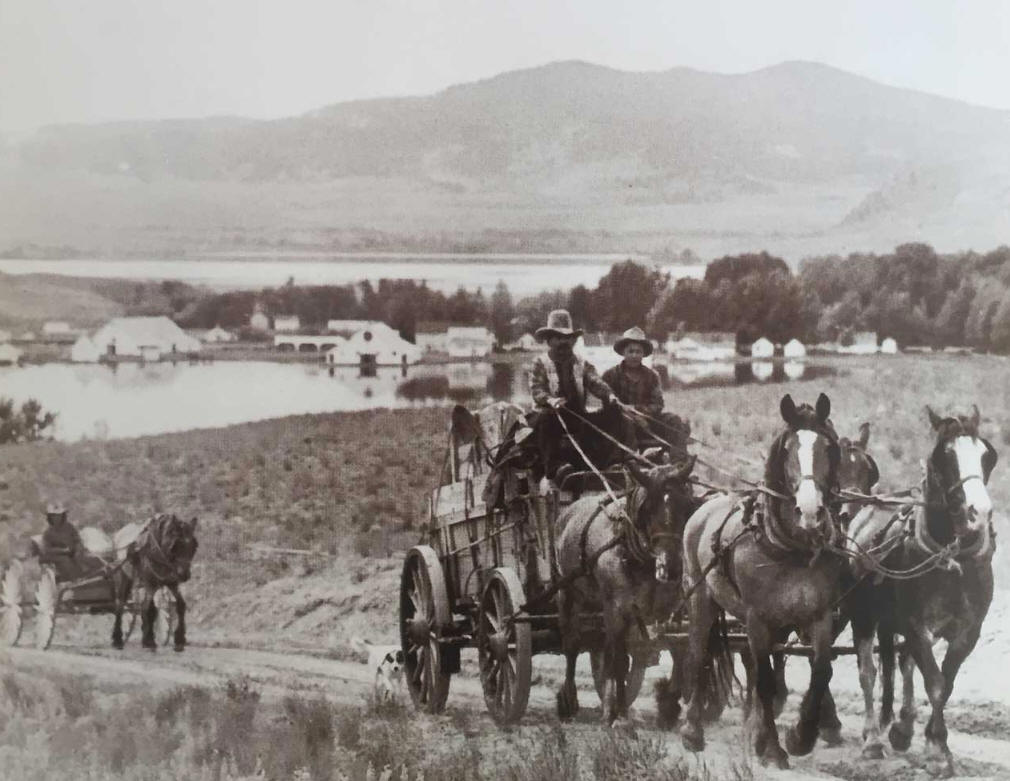
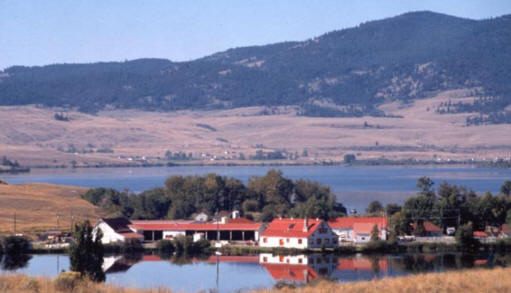
Canada's largest cattle 'empire', the Douglas Lake Cattle Co., uses this simple 'Three Bar' brand. Homesteaded by John Douglas in 1872, the 'spread' grew while supplying meat in the 1880's to Canadian Pacific Railway construction crews. Since then, hundreds of train loads of 'beef' and thousands of head of horses, all bearing this noted brand, have been shipped from the famous ranch's half-million acres.
John Douglas, who named the lake for himself, had first come to British Columbia in 1870 to join the gold rush, but he changed his ambitions when he encountered these wide expanses of natural rangeland, with bunchgrass “high as a horse’s belly.”
In 1884, John Douglas Sr. acquired land by pre-emption near the lake homesteaded 320 acres. and his nephew
- having various run-ins with the Indian clans. He eventually ran it with the help of his nephew John (Jack) before
selling the property to Charles Bea. He, along with Joseph Greaves, Charles Thomson and William Ward, founded Douglas Lake Cattle Company on June 30, 1886; a date which coincided with the first transcontinental train trip of the Canadian Pacific Railway.
Charles Beak was a cattle rancher who had already amassed some 22,000 acres in the Nicola Valley, whereas Greaves, Thomson and Ward were members of a cattle syndicate that purchased cattle with a view to obtaining the Canadian Pacific Railway beef contract. In 1892 Charles Beak sold his interest to the remaining shareholders. Greaves and Thomson both remained until 1910 when Ward purchased their interest. By this time, the Ranch had grown to over 110,000 deeded acres, establishing it as the preeminent ranch in Canada.The Ranch remained under the ownership and management of successive members of the Ward family until 1940.
Throughout this period, the Douglas Lake Ranch's fortunes rose and fell repeatedly. From the highs of World War I to the depths of the Great Depression there were turbulent times. Revenues rose and fell whereas the costs of ranching continued to rise by early 1900s standards. Additionally, ranching was changing as horsepower began to be replaced by the combustion engine.
The Ward family sold to Colonel Victor Spencer and William Studdert in 1950. However, during the period to April 1951, Frank Ross (later to become Lieutenant-Governor of the Province of British Columbia) joined Spencer and Studdert as a third owner. Studdert subsequently sold to Spencer and Ross. By then, the deeded acres had increased to over 145,000 acres (58,000 hectares).
In 1959, Spencer and Ross sold Douglas Lake Ranch to Charles (Chunky) Woodward and John West. West's ownership continued until his death in 1968 at which time Woodward became the sole owner.
In July of 1998 the Woodward family sold to Bernard J. Ebbers, a Canadian born resident of Jackson, Mississippi, who then sold the ranch to a fellow American 2003.
The company has since grown its land base through the purchase of the Alkali Lake Ranch (Williams Lake, BC) in 2008, the purchase of the James Cattle Company (adjacent to Alkali) in 2012, in 2013 the purchase of the Quilchena Cattle Company, and the purchase of Riske Creek Ranching in 2015.
Most recently, Douglas Lake Cattle Company also acquired the historic Gang Ranch(1).
Research notes:
• John Douglas, believed to have been born on
the Isle of Arran in Scotland in 1828. He worked as a surveyor and
played a key role in the early mapping and development of the region. He
later founded the ranch at Douglas Lake, British Columbia. A death
notice in the Daily Alta records his passing on 18 March 1889 in
Cloverdale, California, and notes his previous residence at Douglas
Lake. This date also appears - likely added later - on his father's, Archibald Douglas, gravestone
(also mentions a daughter.).
• It
is also suggested that he was an illegitimate son of Governor James
Douglas. I have some doubts about this and urge care is the use of this
information
Notes:
1. The notorious McLean Gang holed up in a hut close
to Douglas Lake before surrendering. Consisting of Allan, Charlie and Archie McLean and Alex Hare (all 4 of mixed blood), the gang lived by banditry and violence. On 8 December 1879 they killed John Tannatt Ussher, a Kamloops policeman who was arresting them for horse theft, and James Kelly, a shepherd. A posse trapped them in a cabin near Douglas Lake and after a short siege the gang surrendered. At the time Allan was 24, Charlie and Alex 17, and Archie 15. Tried in New Westminster, they were executed in a group hanging on 31 January 1881.
See also:
 |
|
 |
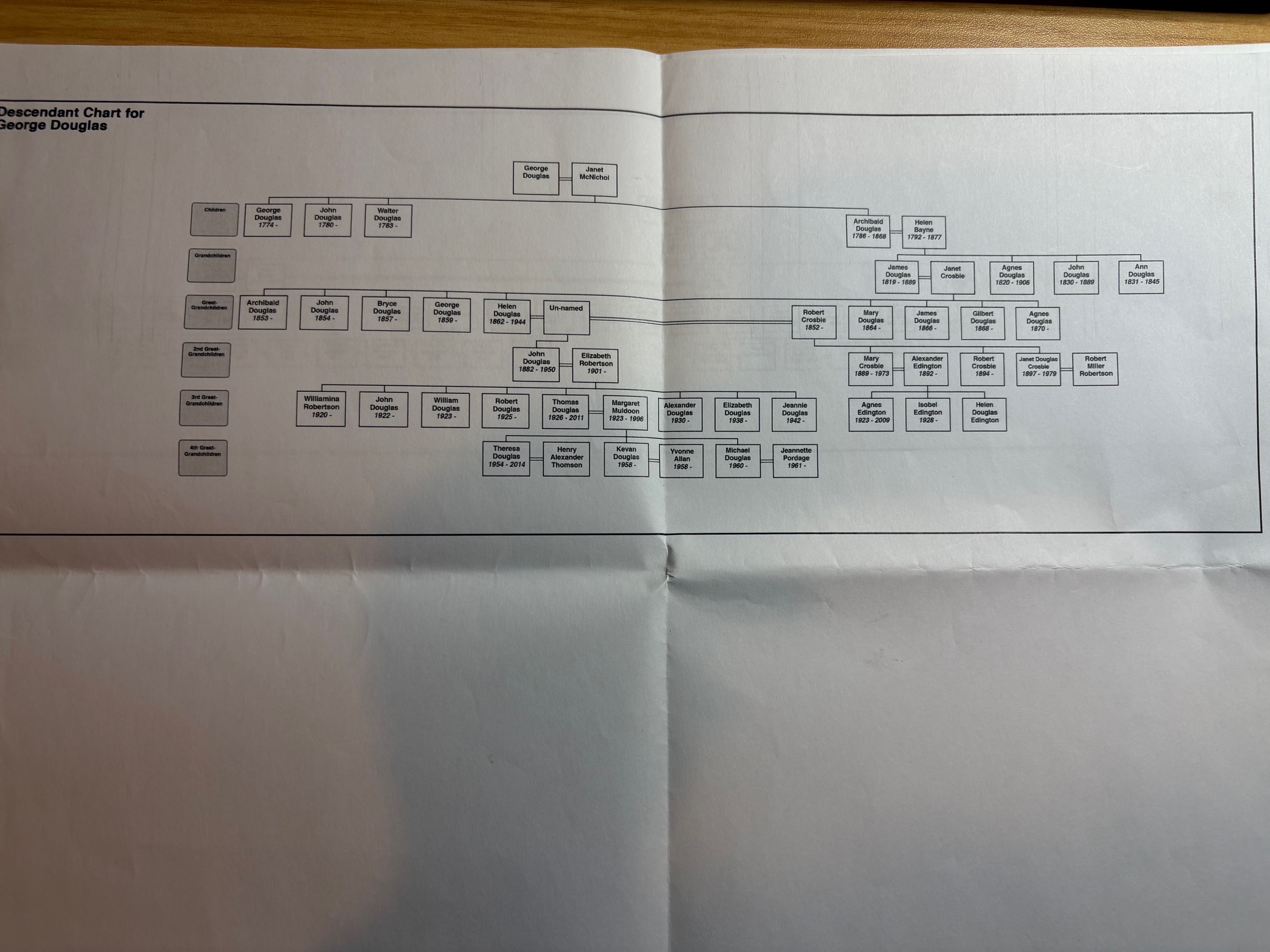
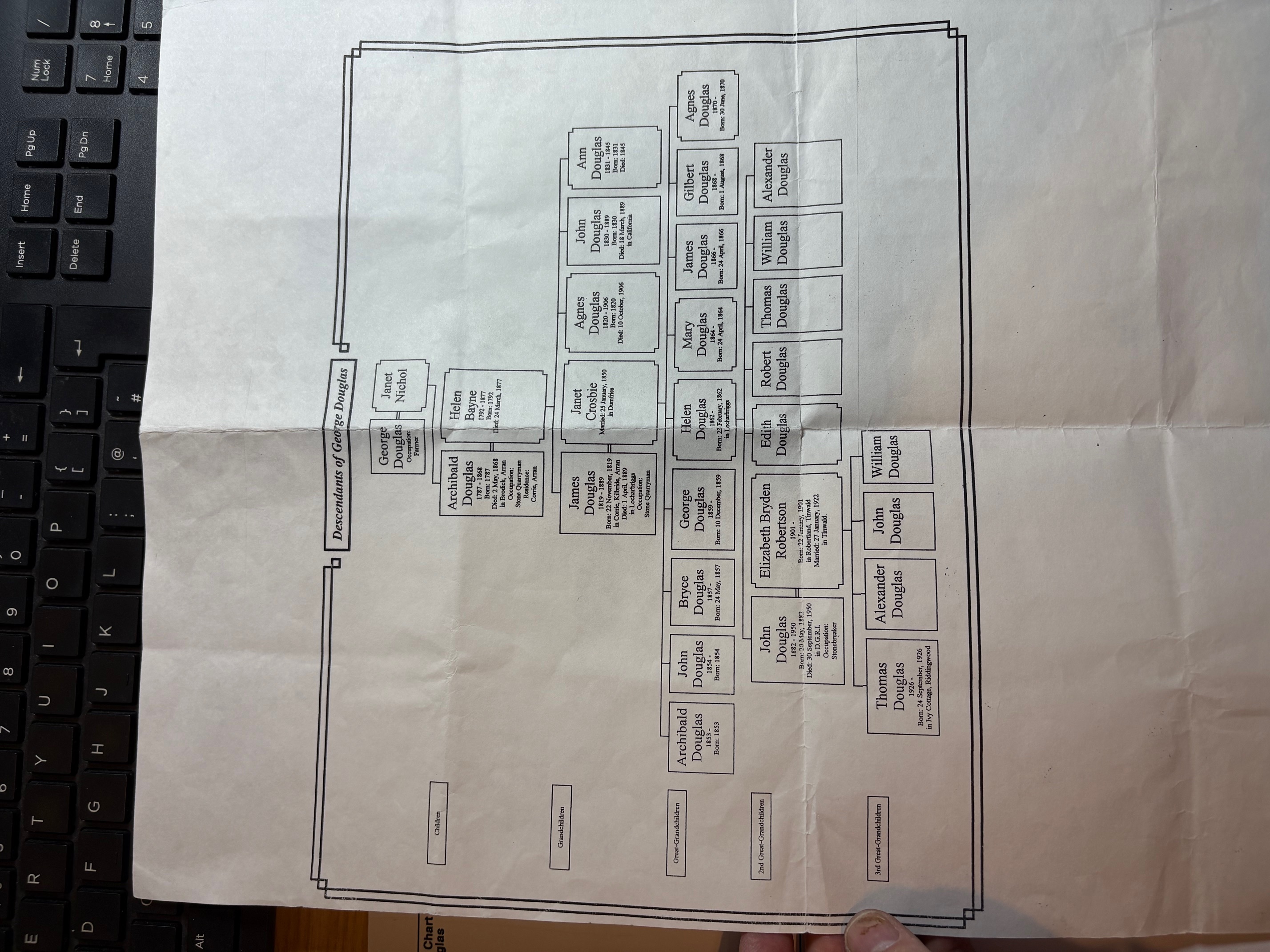
| Family tree 1 |
|
Family tree 2 |
Contributions
Do you have an ancestor whose
story should be told here? Please let us have the details.
|