   |
|
|
|
|
| ||||||
|
Chief Ngogo Obene George Douglas of Buguma ( - 1984)
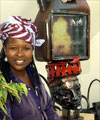
Chief Ngogo Obene George Douglas of Buguma was a respected Kalabari leader whose legacy resonates through both traditional authority and cultural memory. He died in 1984, but his influence endures—most notably through his daughter, the internationally acclaimed sculptor Sokari Douglas Camp. Chief Ngogo Obene George Douglas held a chieftaincy title in Buguma, one of the key towns in the Kalabari Kingdom. As a member of the Douglas House, his lineage connects to the broader royal and mercantile heritage of the Kalabari people, with roots tracing back to Chief Orubibi Douglas and ultimately to King Amachree I. His life bridged traditional leadership and modern transitions in Kalabari society. Upon his death, Sokari Douglas Camp created a monumental kinetic sculpture titled Church Ede as a tribute to her father. The work draws on Kalabari funerary traditions, where the ede (a ceremonial bed for lying in state) symbolizes honour and remembrance. Sokari reimagined this in steel, with motorized mourners fanning the symbolic body—capturing the vibrancy of Kalabari ritual and the enduring spirit of her father. Through Sokari’s art and the continued prominence of the Douglas name, Chief Ngogo’s legacy extends beyond Buguma and Nigeria, contributing to global conversations about heritage, memory, and identity. His life and passing became a catalyst for one of the most iconic works in contemporary African sculpture.  He was father of Sokari Douglas Camp, a West African-born artist, she was born into a prominent Kalabari household. . In 1984, on the death of her father, she created Church Ede, a monumental kinetic sculpture reminiscent of a Kalabari funeral bed, as a tribute to her father. Sokari Douglas Camp lives and works in London. She went to the California College of Art and Craft, and then graduated in 1983 from the Central School, London, before gaining a masters in sculpture from the Royal College of Art, in 1986. Source: http://www.nmafa.si.edu/./exhibits/sokari/church.htm
| |||||||||||||||||||||||||||