In 1514 Archibald,
6th Earl of Angus became the 2nd husband of the Scottish Queen
Dowager, Margaret Tudor, and was responsible for the imprisonment of the young
James V, during which he virtually ruled Scotland. James V escaped his captor in
1528 and Archibald was forced to flee to England in exile. King James V's hatred
for the Douglases extended to Archibald's sister, Lady Janet Douglas of Glamis.
Under the King's orders, Lady Glamis was accused of witchcraft and treason
and was burned at the stake in 1537. (1)
There is a feeling of overwhelming sadness when one enters the chapel in
Glamis Castle and the sounds of hollowing knocking is sometimes heard. The
sadness intensifies around the Grey Lady. She can been seen kneeling in front of
the altar praying. She is one of Scottish history's most tragic victims.
Over 400 years ago the 6th Lord of Glamis married Janet Douglas. They had one
son John. They lived a peaceful and happy life at Glamis until the of death her
husband Lord Glamis, in 1528.
Lady Janet was born into the Douglas Clan. Her brother was the stepfather of
King James V. King James hated his stepfather, obsessed by a deep hatred for
anyone who bore the Douglas name, King James would carry out a ruthless vendetta
against them. Lady Janet became the center of King James' hatred. Lady Janet no
longer had the protection of her marriage to Lord Glamis.
King James confiscated Glamis Castle for the crown by accusing Lady Janet of
witchcraft and of making deadly potions with which to kill him. No one ever
doubted that these accusations were not true, but Lady Janet and her son were
imprisoned in the dark dudgeons of Edinburgh Castle. Occupying Glamis, King
James held court there from 1537 to 1542.
Throwing Lady Janet into prison was easy for King James, but convicting her
of his trumped up charge of witchcraft would be difficult. Her character was
impeccable, without blemish, and she was very much respected by everyone who
knew her. In order to get the testimony he needed to convict her, the King
resorted to torture. Her clansmen and servants were put on the rack and
stretched to the point of agony. They finally gave false evidence against
her.
John, her son, who was 16 at the time was forced to watch in horror, before
being brutality tortured himself. Using these savage tactics the King got his
confessions. Lady Janet was convicted of witchcraft, and she and her son were
condemned to death. On July 17, 1537, almost blind from her long imprisonment in
the dungeon, Lady Janet Glamis was burned alive at Edinburgh
Castle. On lookers
fell silent.
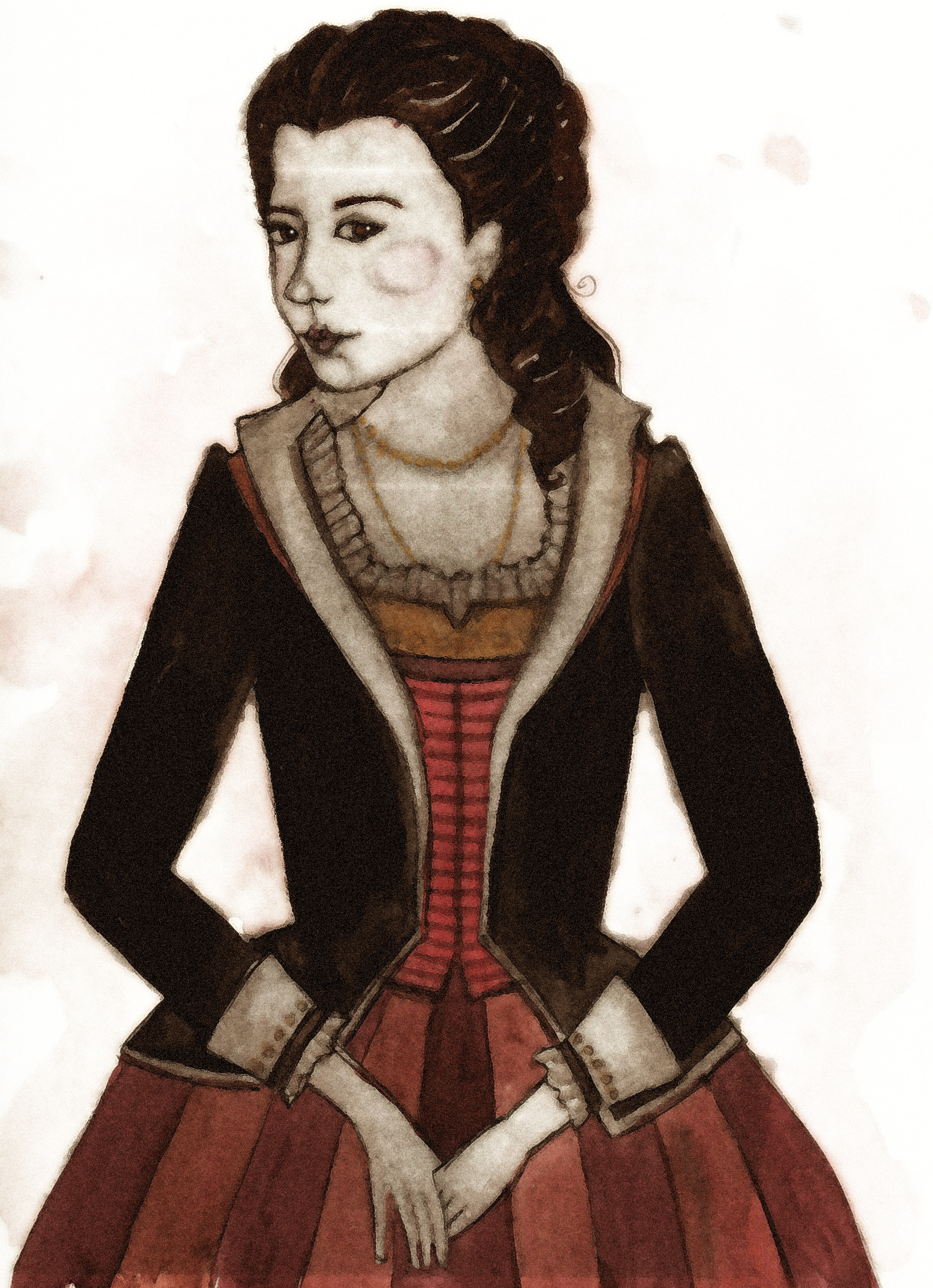
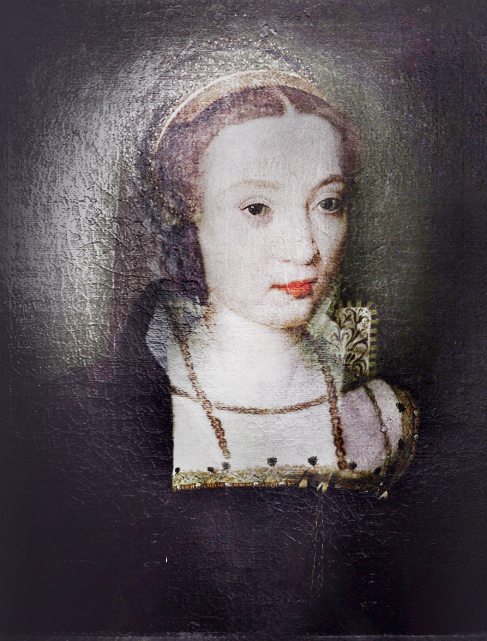
Lady Janet was a beautiful young woman. An eyewitness of the execution
described her suffering with great commiseration. Being in the prime of her
years, of singular beauty, she endured her suffering, and although being a
woman, with a man like courage. Her innocence was never doubted. It is believed
that she was not executed for witchcraft, but for the hatred James V had for her
brother.
Her son John, the 7th Lord of Glamis was released after King James V died.
Parliament restored Glamis back to him. Sadly upon his return to the castle he
found that everything of value had been taken by James V. Before his death, it
is said King James V had felt remorse for his actions.
After Lady Janet's execution the Grey Lady began appearing at the castle. The
hollow knocking sound heard is thought to be the hammering of the workmen
building the scaffold on which Lady Janet was burned alive. Lady Janet's spirit
wanders Glamis Castle and can not only be seen in the chapel but above the clock
tower as well.
Notes:
1. Although several reports
state that she was a witch, there is no evidence that this is true.
Dr Deborah Richmond Foulkes, author of FLAMES OF MY TRUTH, The Tragic
Execution of Janet Douglas, writes: I reviewed the entire surviving
records that Pictcairn published on Criminal Trials in Scotland and in all
three trials involving Janet, she was never charged with witchcraft. I did
find that her son was charged and around June 10 1537 gave testimony to
accuse his mother of imagining the poisoning of the king...but he had
baggage of his own with accusations of accompanying Master Forbes in a
raid to shoot the king with a culverin in Aberdeenshire...and as as trying
to poison Earl Rothes.
I do believe that Janet's daughter Margaret Lyon
was born deformed (not the first or last in the Lyon line) which led
people in the 16th c. to point to the mother as one who used witchcraft or
practiced adultery. The daughter, born around 1524, died in 1610 and at
one time James V described her as that 'thing' residing in a locked room
at Glamis (before he removed her to the N. Berwick nunnery in 1537).
Read more: