This image is the copyright of Mr. Spratt who
has generously given permission to display them here. For more
about Andrew Spratt click here.
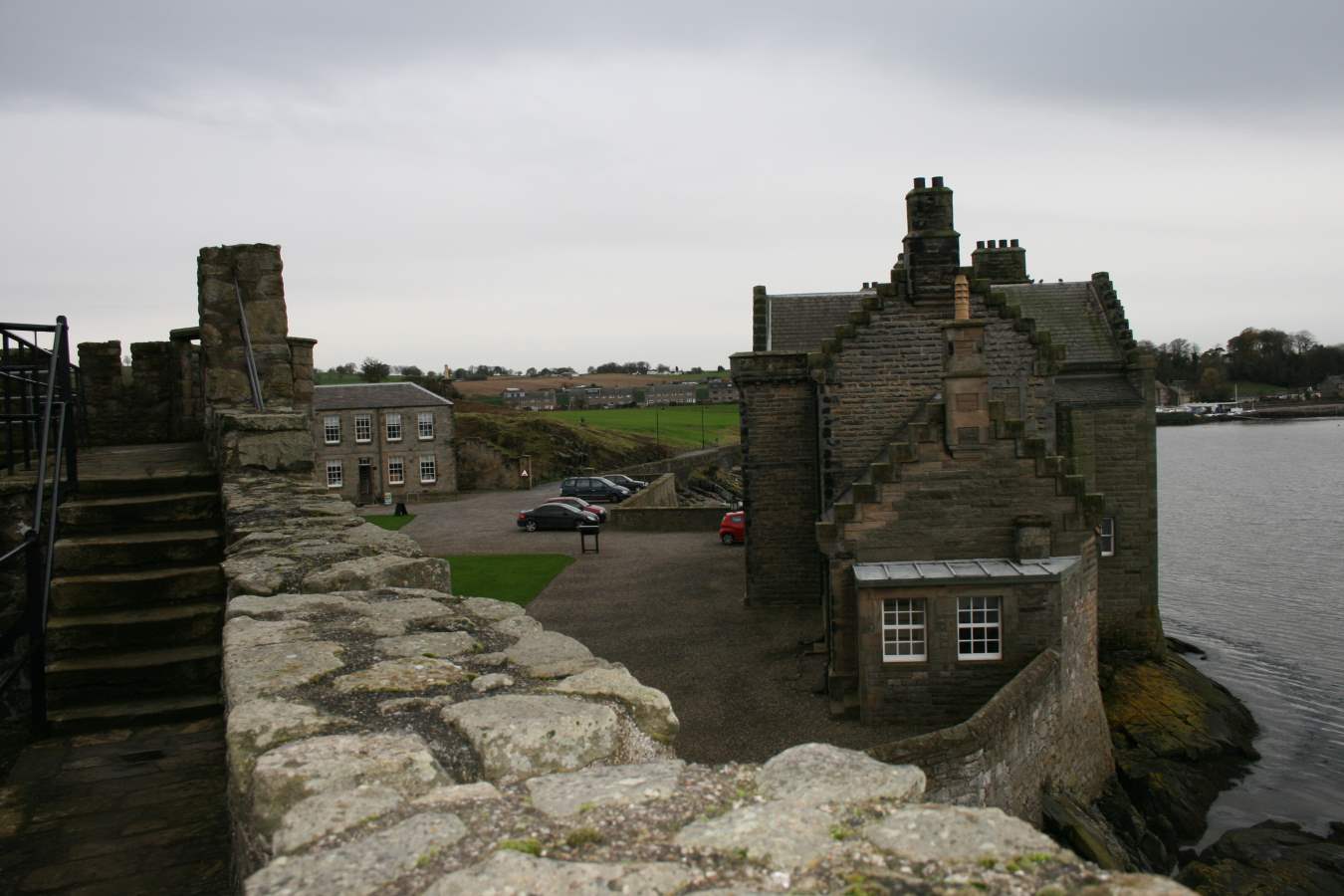
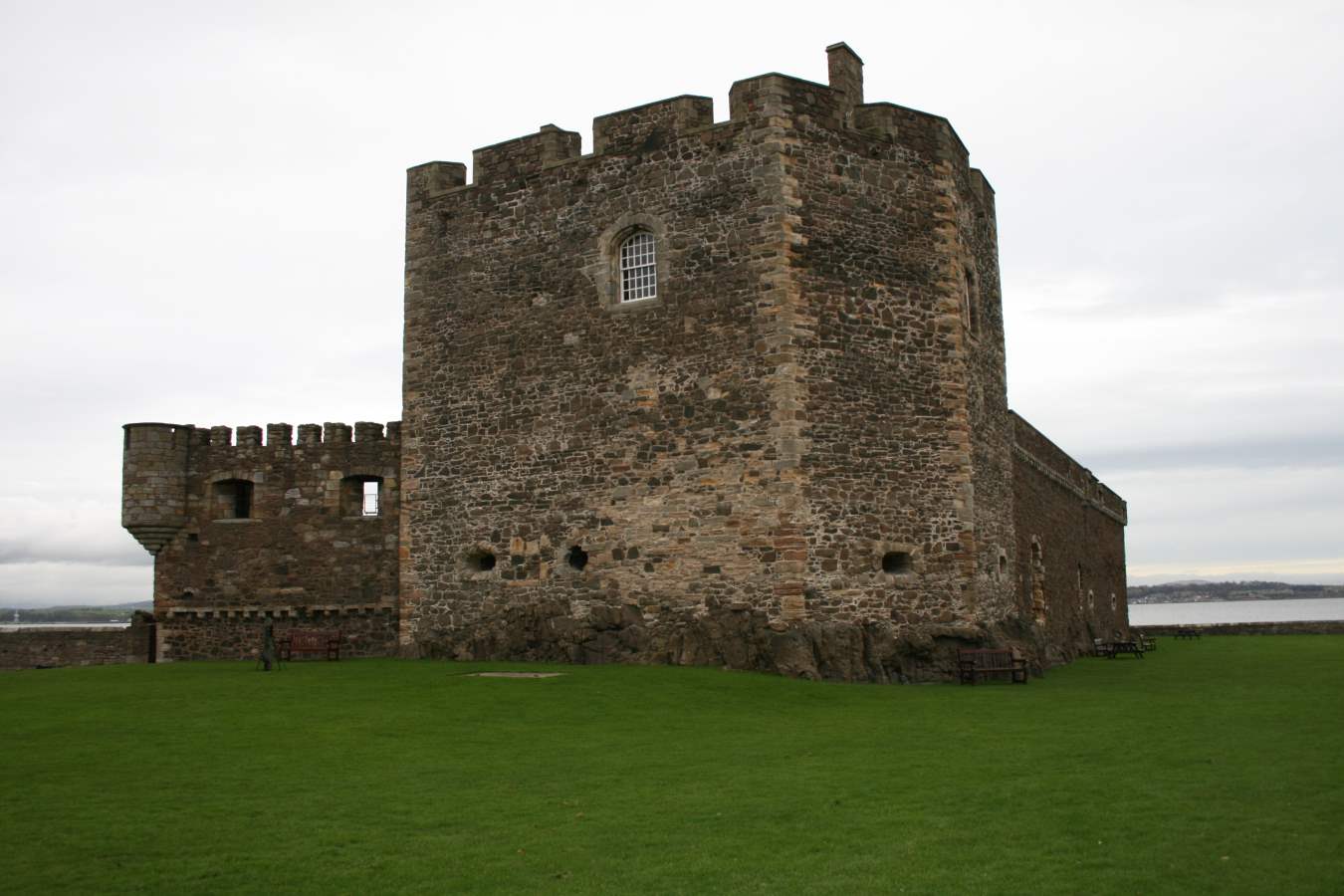
Blackness Castle stands
beside the Firth of Forth, at the seaport which in medieval times served the
royal burgh of Linlithgow. The castle was built in the 15th century by one
of Scotland’s more powerful families, the Crichtons.
The Crichtons
were newcomers on the political stage at the time of growing unrest between
the Crown and the mighty Black Douglases. One of the strongest Douglas
castles lay at Abercorn, just east of Blackness.
The Crichton's attempted to exploit this situation.
In 1440, George's
cousin, William, Chancellor of Scotland, arranged the infamous 'Black
Dinner' in Edinburgh Castle, at which
the 6th Earl of Douglas was summarily executed. Then in 1441 George
married Lady Janet, widow of Lord Borthwick and heiress of Douglas of
Dalkeith, with lands not only in Lothian but also in SW Scotland, the
heartland of the Black Douglases. The Douglases responded with force.
In August 1443 William Douglas, the 8th Earl, laid siege to George
Crichton's Barnton Castle, captured and
destroyed it. George may have built Blackness Castle to compensate.
The Crichtons rose in importance as the Crown's struggle with the Black
Douglases intensified. In 1452, James II himself killed the 8th earl
at Stirling Castle. George Crichton's
lyalty was rewarded with the earldom of Caithness, while cousin William was
confirmed as Earl of Moray
But Blackness was not destined to
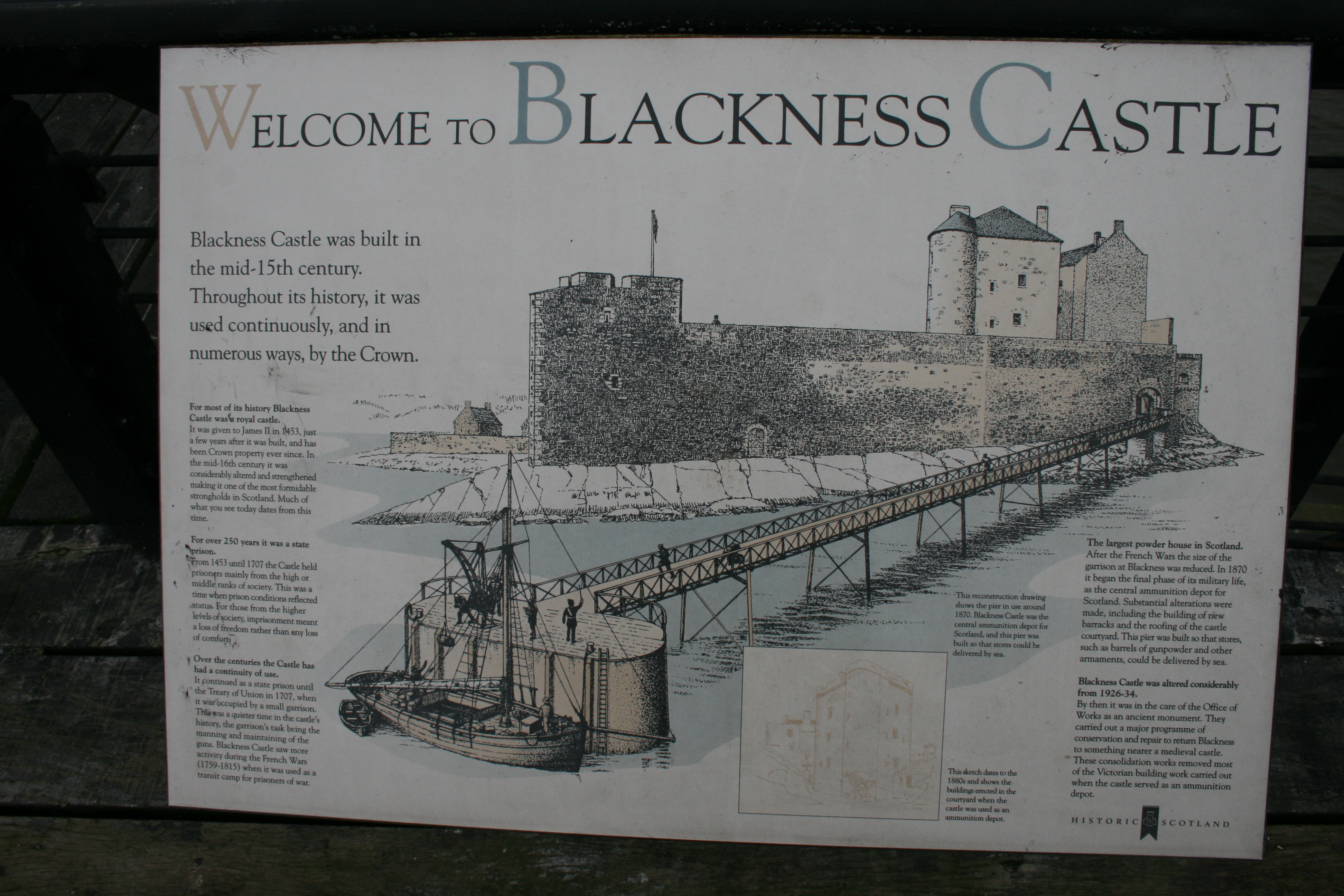
serve as a peaceful lordly residence. In 1453 it became a royal castle and
its enduring roles were those of garrison fortress and state prison. In the
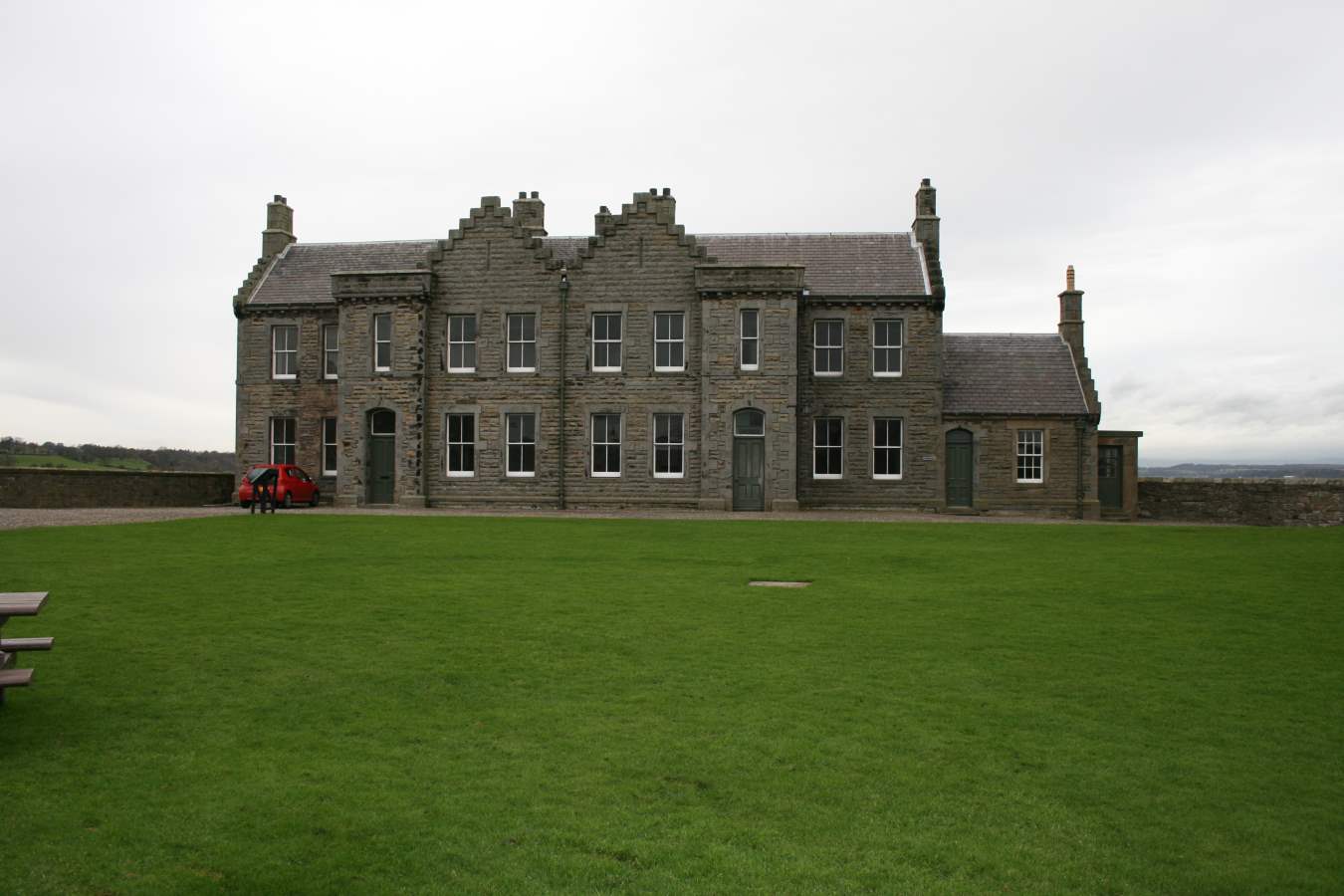
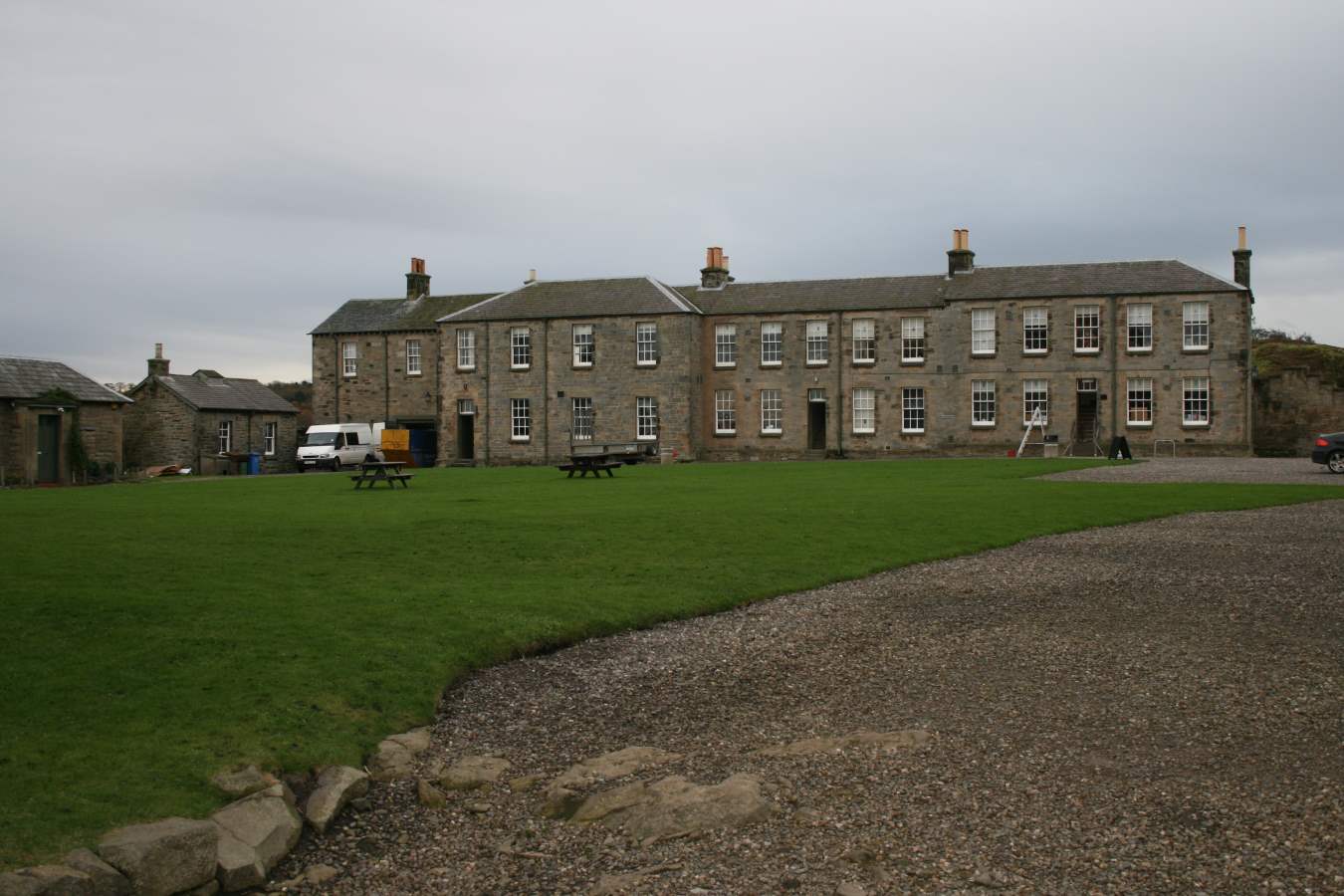
twilight of its days in the later 19th century, Blackness served as an
ammunition depot, but after the First World War it was decommissioned and
passed into state care as a visitor attraction.
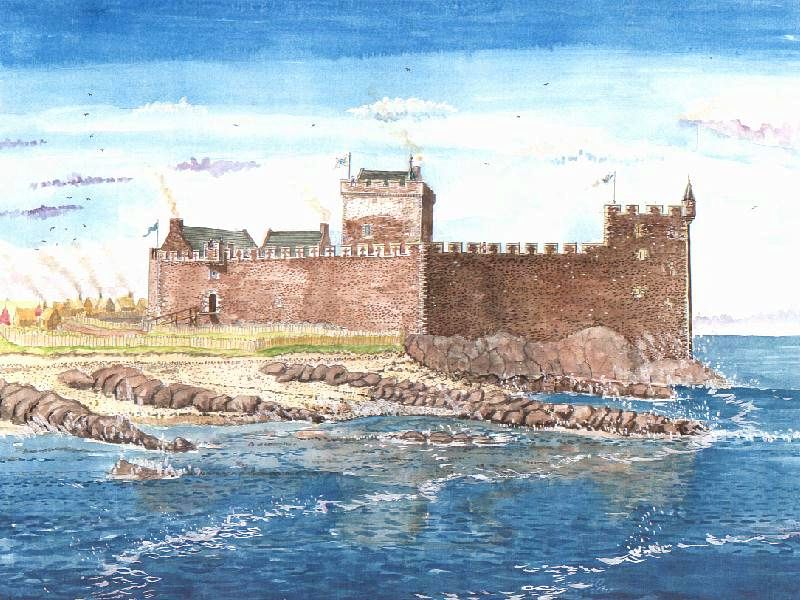
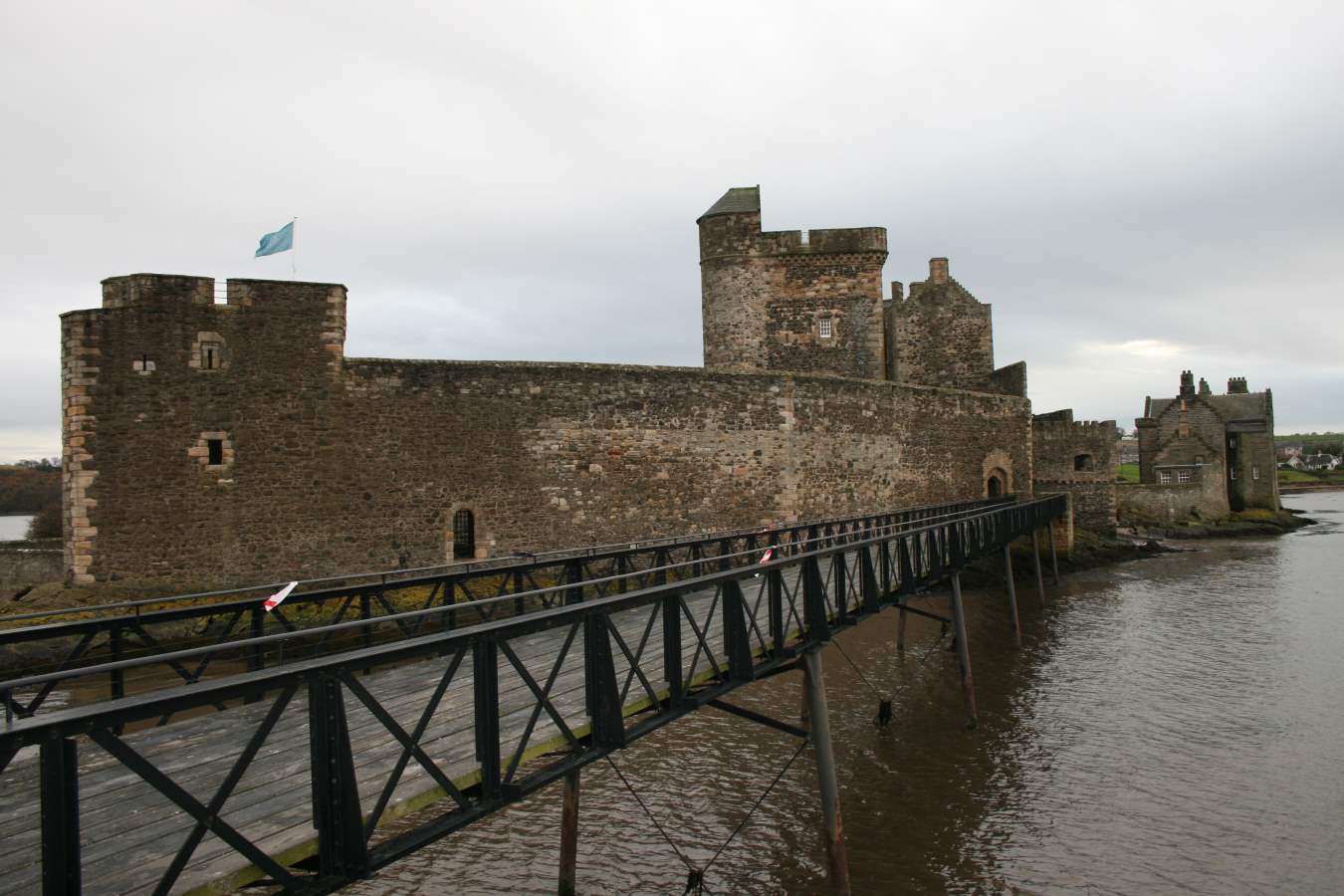
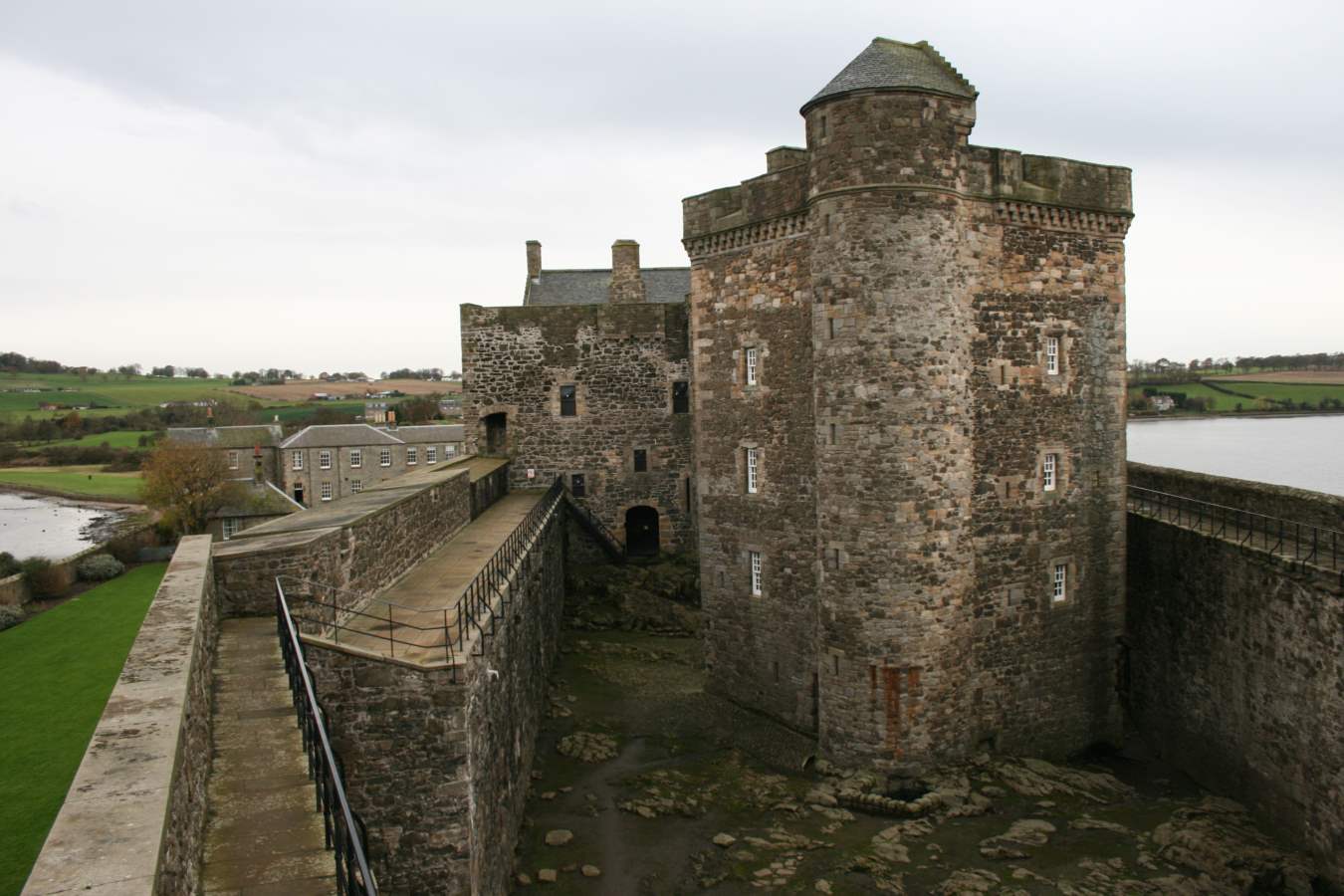
Blackness is often
referred to as ‘the ship that never sailed’. This is because of its
appearance, for from the seaward side it looks just like a great stone ship
that has run aground. The pointed stem projects into the water, while the
square stern stands beached on dry land. The castle’s three towers add to
the effect – the small ‘stem’ tower at the prow, the tall ‘main mast’ tower
at the centre, and the solid ‘stern’ tower at the rear.
In 1537,
James V (1513–42) embarked on an ambitious programme to convert the
15th-century castle into a formidable artillery fortification. The looming
threat from Henry VIII’s Protestant England was the catalyst. The work was
completed in 1543, just as the ‘Wars of the Rough Wooing’ were about to
erupt.
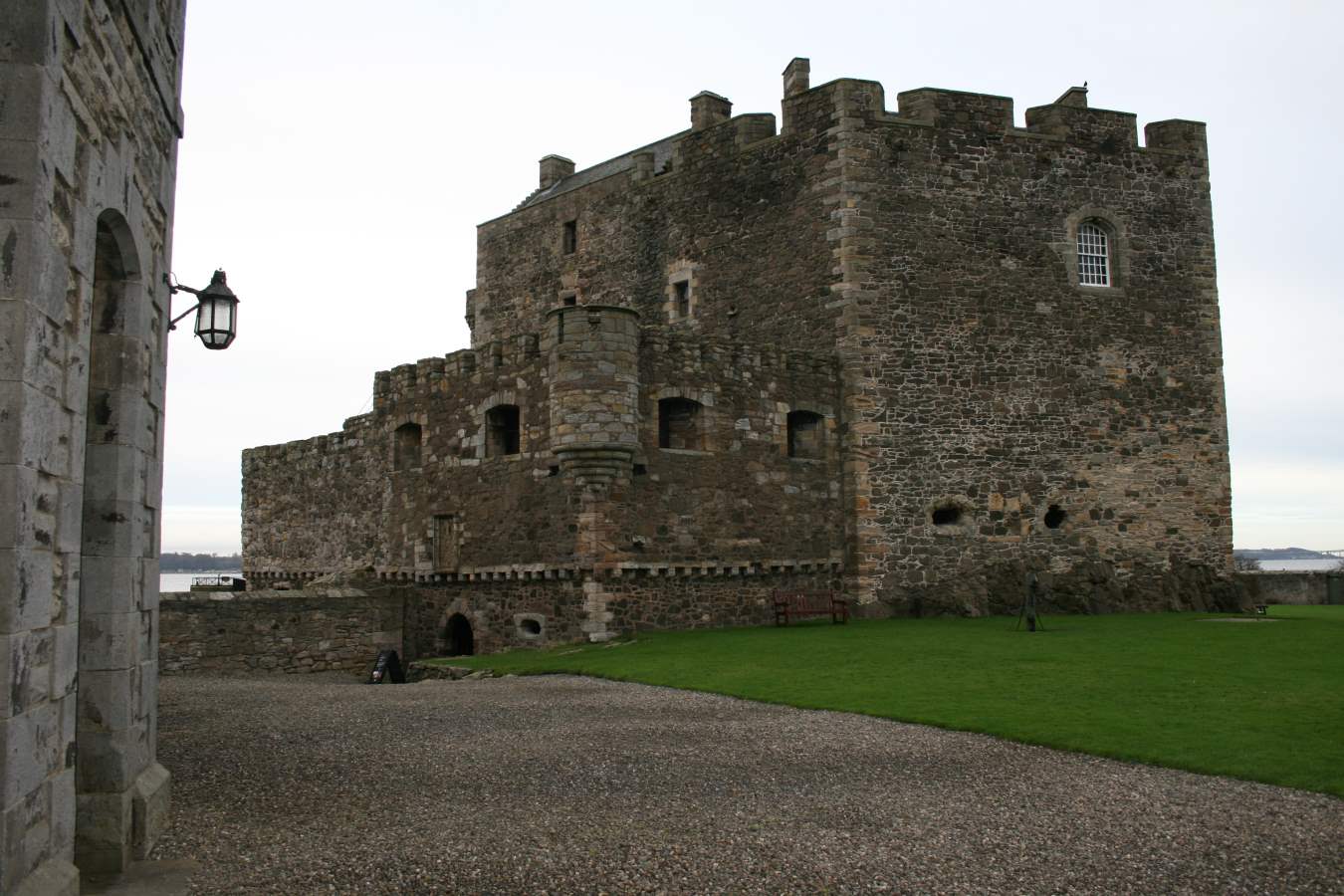
Mighty Blackness had none of the subtlety of the great
Italianate artillery fortifications. Instead, a brute mass of masonry (the
‘stern’ tower) confronted bombardment from the land, with defensive cannons
firing through yawning great gunholes positioned to give all-round
firepower. The vastly strengthened castle withstood various sieges, until in
1650 Oliver Cromwell’s heavy guns devastated the defences, forcing the
garrison to surrender. The scars of that bombardment are still in evidence
today.
Dour Blackness was no suitable residence for a nobleman. It
was a garrison stronghold first and foremost. It also came to be used as a
state prison for those whom the reigning sovereign wished to see safely out
of the way.
Countless noblemen were held here during the later Middle
Ages, none more important perhaps than Cardinal David Beaton, Archbishop of
St Andrews, in 1543. In the notorious ‘Killing Time’ of the 1670s and 1680s,
many a Covenanter (religious dissident) was incarcerated here by Charles II
and James VIII. In the later 18th century, Blackness served as a prison of
war for foreign sailors and soldiers captured during the wars with France,
Spain and the fledgling United States of America.
|
|