William Tregarthen Douglass
William Tregarthen Douglass (23rd March 1857 - 10 August 1913) was
born at Solva, Pembrokeshire, being the son of the late
Sir James Nicholas Douglass, who was for many years
Engineer-in-Chief to the Trinity House. His uncle
William and his
grandfather Nicholas were also
famous in lighthouse construction
He was educated at Dulwich Collegeand King's College, London, in the Applied Science
Department
Having served his pupilage at the Trinity House
for three years, from 1875 to 1878, under his father, and at the
engineering workshops at Blackwall, he studied optics and the
manufacture of optical apparatus at Messrs. Chance Brothers'
lighthouse works, Birmingham, under the late Dr. John Hopkinson,
F.R.S.
From June 1878 to August 1882 he was resident engineer
at the erection of the new Eddystone Lighthouse, and had sole charge
of the works in connection with the removal of Smeaton's tower.
From 1882 to 1887 he was resident engineer in sole charge of the
difficult work of strengthening and improving the Bishop Rock
lighthouse, Scilly Isles, and he erected a lighthouse on Round
Island, in the same locality.
He also carried out a large
amount of engineering work of the same nature, and at the time of
his death was consulting engineer to the Governments of Western
Australia, New South Wales, and Victoria, and inspecting engineer to
the Royal National Life-Boat Institution, for which he designed
their life-boat stations and slipways, etc. At Cromer he constructed
the sea wall, and at Lowestoft his system of groynes was adopted by
the local authority.
In 1899 he was selected by the Secretary
of State for India to inspect and report on the whole of the
lighthouses of India and Burma, comprising ninety stations and
covering an immense stretch of coast and river line. He was the
author of several books on lighthouses, and on the lighting of
estuaries and rivers.
He was elected a Member of this
Institution in 1887; he was also a Member of the Institution of
Civil Engineers, and a Fellow of King's College, London.
Examples of Douglass's
designsr>
Fastnet Rock Lighthouse, County Cork (1897–1904)
Blackhead Lighthouse Complex, McCrea’s Brae, built by William
Campbell & Sons contractors between 1899 and 1902 to aid shipping in
Belfast Lough, complementing a lighthouse at Mew Island (Copeland
Islands), opened in 1884. Blackhead opened 1 April 1902 and was
automated in 1975.
Blackhead Lighthouse, Whitehead, County
Antrim, Northern Ireland
Blackhead Lighthouse Superintendent
House, which since automation is rented out to the general public.
William Tregarthen Douglass's death took place by drowning on 10th August
1913, at the age of fifty-six while visiting his mother. While out
with his son, Edward, in a sailing-boat, the latter capsized when off Start
Point, near Dartmouth, and sank. The son(1), who was picked up by a
pleasure steamer, swam with his father for about three-quarters of a
mile, when the latter became exhausted and was drowned, in spite of
efforts made by his son to keep him afloat.
 Notes:
1. While working on the Eddystone he married Ada
James of Plymouth and had two daughters and two sons. Both his sons
were killed in action. Percy
Cuthbert D. Douglass in 1917 (WW1), unmarried, and Edward James
Douglass (See below) who married Frances Muriel Kroenig Ryan in 1924
and they have one living daughter.
147475 Lieutenant Edward James Douglass was the son of William
Tregarthen Douglass and Ada Douglass and husband of Francis Muriel
Douglass of Paddington, London. He was a Freeman of the City of
London. He was awarded the Military Medal.
He served with 16
Bomb Disposal Company, Royal Engineers and died on the 17th February
1943, aged 46, apparently 'in an incident at Brackenhurst, Higher
Lane, Mumbles, Wales'. He was probably killed clearing bombs after
an air raid on Swansea.
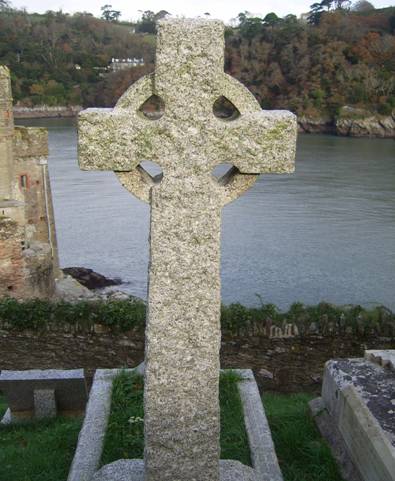
He was buried at Saint Perox
Churchyard, Dartmouth.
See also:
Douglass Brothers Limited, Globe Iron Works, Blaydon

Any contributions to this item will be
gratefully accepted
Errors and Omissions
|
|
The Forum
|
|
What's new?
|
|
We are looking for your help to improve the accuracy of The Douglas
Archives.
If you spot errors, or omissions, then
please do let us know
Contributions
Many articles are stubs which would benefit from re-writing.
Can you help?
Copyright
You are not authorized to add this page or any images from this page
to Ancestry.com (or its subsidiaries) or other fee-paying sites
without our express permission and then, if given, only by including
our copyright and a URL link to the web site.
|
|
If you have met a brick wall
with your research, then posting a notice in the Douglas Archives
Forum may be the answer. Or, it may help you find the answer!
You may also be able to help others answer their queries.
Visit the
Douglas Archives Forum.
2 Minute Survey
To provide feedback on the website, please take a couple of
minutes to complete our
survey.
|
|
We try to keep everyone up to date with new entries, via our
What's New section on the
home page.
We also use
the Community
Network to keep researchers abreast of developments in the
Douglas Archives.
Help with costs
Maintaining the three sections of the site has its costs. Any
contribution the defray them is very welcome
Donate
Newsletter
If you would like to receive a very occasional newsletter -
Sign up!
|
|
|
|
|
|
|
|